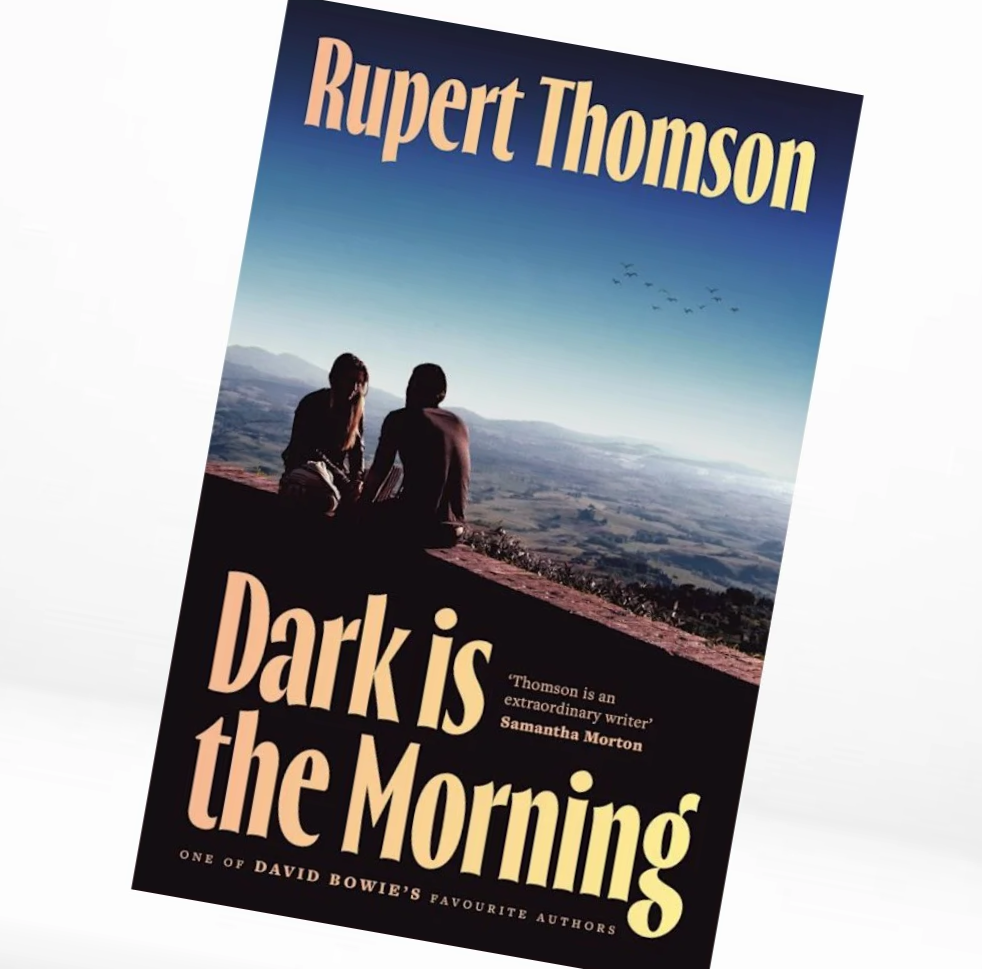
Dark is the Morning (2026)
Why this one?
I’ve enjoyed everything I’ve read by Thomson to date, with particular highlights being the dystopian Divided Kingdom (2005) and the more recent (and wildly different) Never Anyone But You. I also reviewed his most recent novel, How to Make a Bomb, last year.
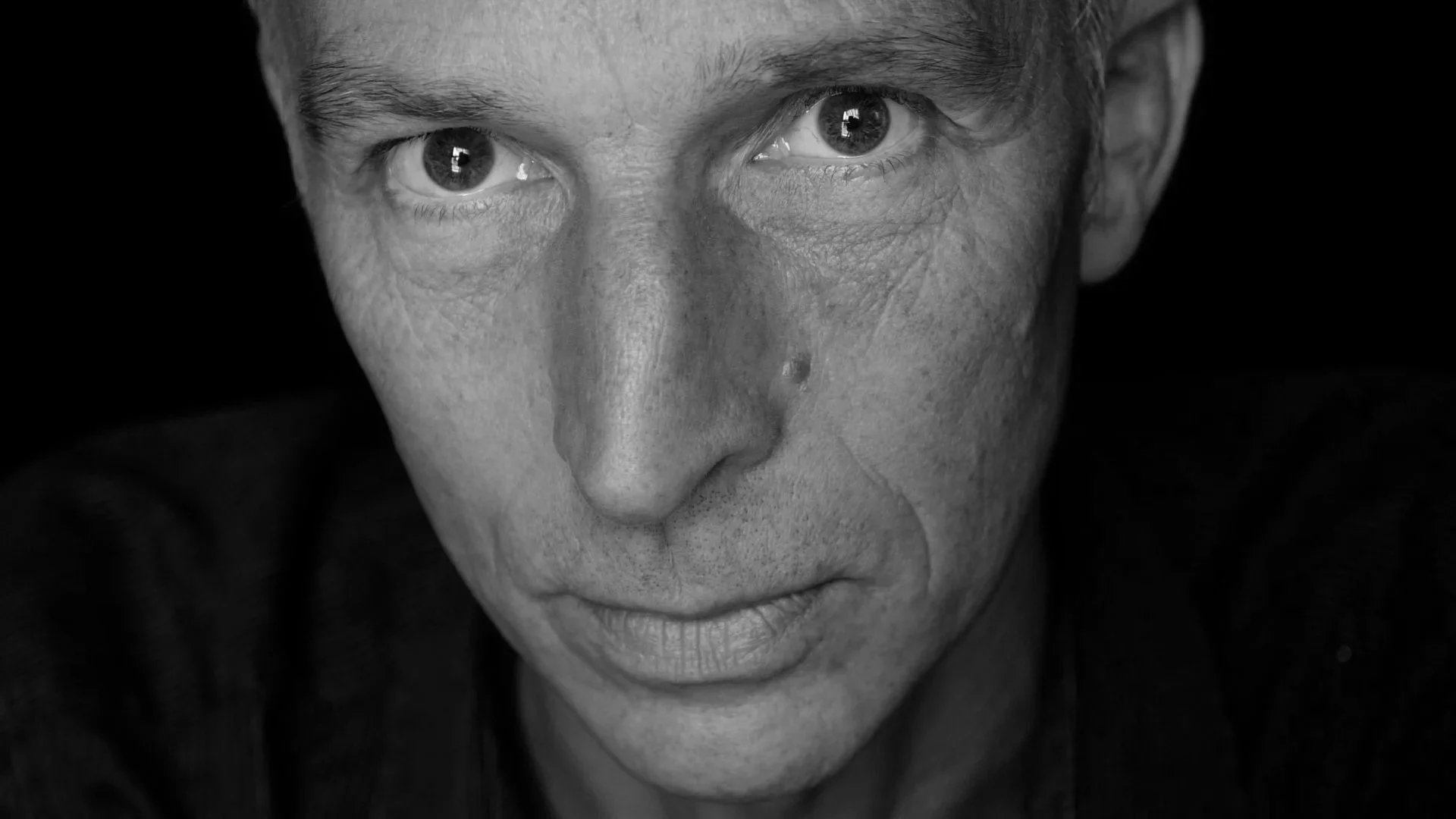
Rupert Thomson (1955- ; active c. 1976- ) was born in Eastbourne, in southern England. He lost his mother at a young age and subsequently attended Christ's Hospital, a charitable boarding school. While there, he developed an interest in poetry and began writing himself. He later studied Medieval History and Political Philosophy at Sidney Sussex College, Cambridge, where he had poems published in several magazines.
Following university, he traveled extensively in North America, and spent time living in Athens, before taking a role as an advertising copywriter in London. After four years he gave this up to devote himself to creative writing, initially living in Italy before moving around through the 80s, with spells in West Berlin, New York and Tokyo. In this period he wrote his debut novel Dreams of Leaving, which was eventually published by Bloomsbury in 1987.
His subsequent works have included The Insult (1996), which was listed by David Bowie as one of his top 100 reads, and the unsettling The Book of Revelation (1999), which as well as being my own introduction to Thomson's work, was adapted as a film in 2006 by Ana Kokkinos. 2009's Death of a Murderer centres on Moors murderer Myra Hindley and was shortlisted for the Costa prize. In 2010 he published the memoir This Party's Got to Stop, and in 2020 published a novel (NVK) under the pseudonym Temple Drake. He has continued to regularly put out acclaimed novels, including Katherine Carlyle (2015), Never Anyone But You (2018) and Barcelona Dreaming (2021). Despite consistent critical acclaim, he has yet to win any literary prize for his fiction.
Dark is the Morning will be published by Head of Zeus in May 2026. Thanks to them and Netgalley for the ARC.
Thoughts, etc.
Dark is the Morning takes place in Abruzzo, Italy, predominantly in the early 2000s. At its centre is a relationship between Gino, who after a mis-spent youth is trying to get his life back on track, and Franca, who told him when they were children that they would one day marry. The novel is set up as a romance, in which two outsiders look set to make amends for their failure to get it together during some initial adventures as teenagers. However, we know from the start that things are unlikely to be as simple as that, via means of words that conclude its introductory chapter, narrated by the Englishman Harry who (from the present day) refers ominously to ‘those events’ that took place in the early 2000s.
Initially, things do run almost too smoothly for the young lovers, who marry, inherit a dilapidated and isolated farmhouse, and soon after become parents. A combination of factors conspire to undermine this seemingly perfect scenario. We’re aware from early on that Gino has somewhat auto-destructive tendencies, and a past that includes both substance abuse and violent events. And despite marrying the woman who professed here loyalty to him from a young age, and subsequently offered him ‘all of myself’, he also demonstrates a propensity for jealousy, showing signs of suspicion over her post work drinks. He also learns early in their relationship of a previous affair she had with a married rich local businessman, Enzo Pierozzi. Never entirely comfortable with being made privy to this secret relationship, he is unable to file it away and is instead determined to confront Enzo, and when he does so he is taken aback by his beauty, which sits in contrast to his own negative self-image.
When Gino and Franca’s son is born, the story takes on a slightly different tone, with the reaction of everyone around them to the child’s beauty having a kind of quasi-mythical element to it. People stop them in the street, travel from far afield to visit their remote house, and generally treat the baby as some kind of miracle. While the book is set in rural Italy, and subsequently populated with characters who may be inclined towards religious fervour, it nonetheless seems to take the story outside of a purely realist mode and into the realms of the fantastical, heightened further as the child ‘speaks’ to Gino. His words are a manifestation of what Gino has already been building to, a fierce paranoia built around the idea that the child is not his - that his impossible beauty could not have come from two outsiders, and must therefore be the result of a further infidelity, which takes him in only one direction, ultimately with disastrous consequences for him and everyone around him.
It’s a typically brilliantly crafted piece of storytelling from Thomson, which draws on techniques from myths and fables to explore ideas of fate and destiny. We’re drawn in early on by the compelling characters and beautiful scenery, with our enjoyment of the developing love story undercut by warnings seeded from the start. And then something intervenes to send things spiralling out of control, and the rest of the book is read with a growing sense of horror as Gino seems increasingly doomed to destroy the life he has clawed back for himself. While its central themes are those of jealousy and paranoia, there’s something deeper in its character study of Gino. Despite encouragement from surrogate father-figure Harry that his son’s beauty is not evidence of infidelity but of a beauty within himself that he cannot see, Gino is ultimately unable to believe that narrative, seeing himself as fundamentally and irredeemably flawed, a belief that ultimately leads him to his disastrous end.
The framing of the book by Harry is an interesting choice on Thomson’s part. I did have a few questions as to why he gives this character such a prominent voice in what’s clearly the story of Gino and Franca. But on reflection I do think there is a logic to it. Given its fabular qualities, it’s a book that almost demands a ‘storyteller’ framing. Harry makes sense as an outsider in most senses, not from the culture that generates the relationship and also produces some of the instigating oddness that catalyses Gino’s undoing. Yet at the same time he’s developed a lifelong (albeit mostly arms-length) connection with Gino and is therefore able to offer fatherly interventions and a commentary drawn from his own experiences of a relationship that has seen its troubles but is managed in some way. He’s also intrinsically connected to their story, despite his distance. He doesn’t just frame the book, but also their relationship - present at an incident that defined their failed teenage attempts to connect, and also involved (as a kind of doomed quasi-Shakespearean ‘messenger’) in their final unravelling.
Score
9
This is up there with the best of Thomson’s work, a modern-day tragic fairytale with a haunting quality that I suspect will linger long after reading.
Like the sound of this one? Buy it at bookshop.org.
(If you click through and make a purchase, I may earn a small commission from Bookshop.org at no additional cost to you, which helps support local independent bookshops. I’ll only share these links for the highest rated titles on the site. )
Next up
TBC.