
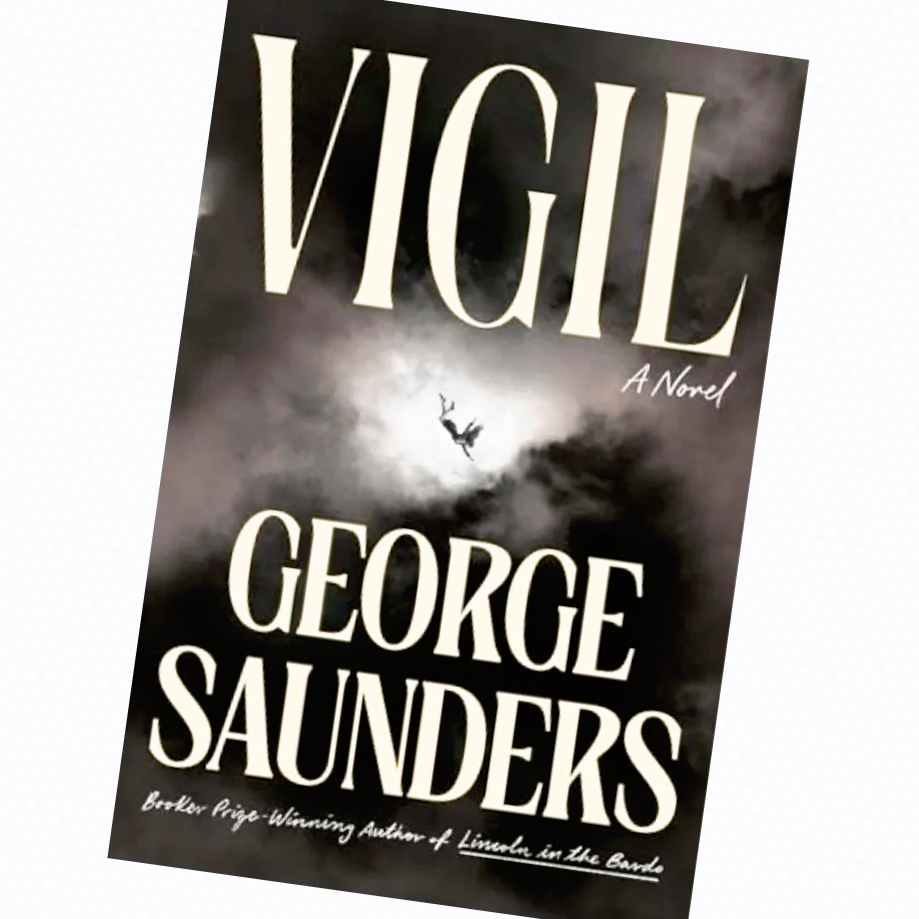
Vigil (2026)
Vigil takes us back to what many have dubbed the ‘Bardoverse’, that being a kind of purgatorial netherworld inhabited by the dead that formed the primary focus of Lincoln in the Bardo. Here, though, the setting is the present day (or thereabouts) and instead of a graveyard we largely find ourselves at the bedside of a dying man, the powerful oil executive K. J. Boone. We are introduced to him through the eyes of Jill “Doll” Blaine, a young woman who died (in a rather unfortunate case of mistaken identity) in the 1970s, and has been sent to ‘comfort’ Boone through his dying moments. While she has been through this process more than 300 times in her afterlife, Boone represents an entirely new experience for her. He is an unrepentant architect of climate change, and even aside from that, a man with precious few redeeming qualities.

Liberation Day (2022)
For the first time on here I’m tackling a collection of short stories. Liberation Day contains nine of them, with no immediately obvious uniting theme. They move between realist character studies, packed with humour and insight, and much darker mini-dystopias.

The Booker in the 2010s
The 2010s were a hugely significant decade for the Booker, largely due to the shift in rules which came into place in 2014. From that year onwards, the Prize was open to all novels published in the English language, replacing the long-held (and many might say, dated) criteria that focused on authors of British, Irish and Commonwealth heritage. This shift led to a lot of hand-wringing and fretting about the potential “domination” of the Prize by US authors, and a dilution of what the Prize stood for.
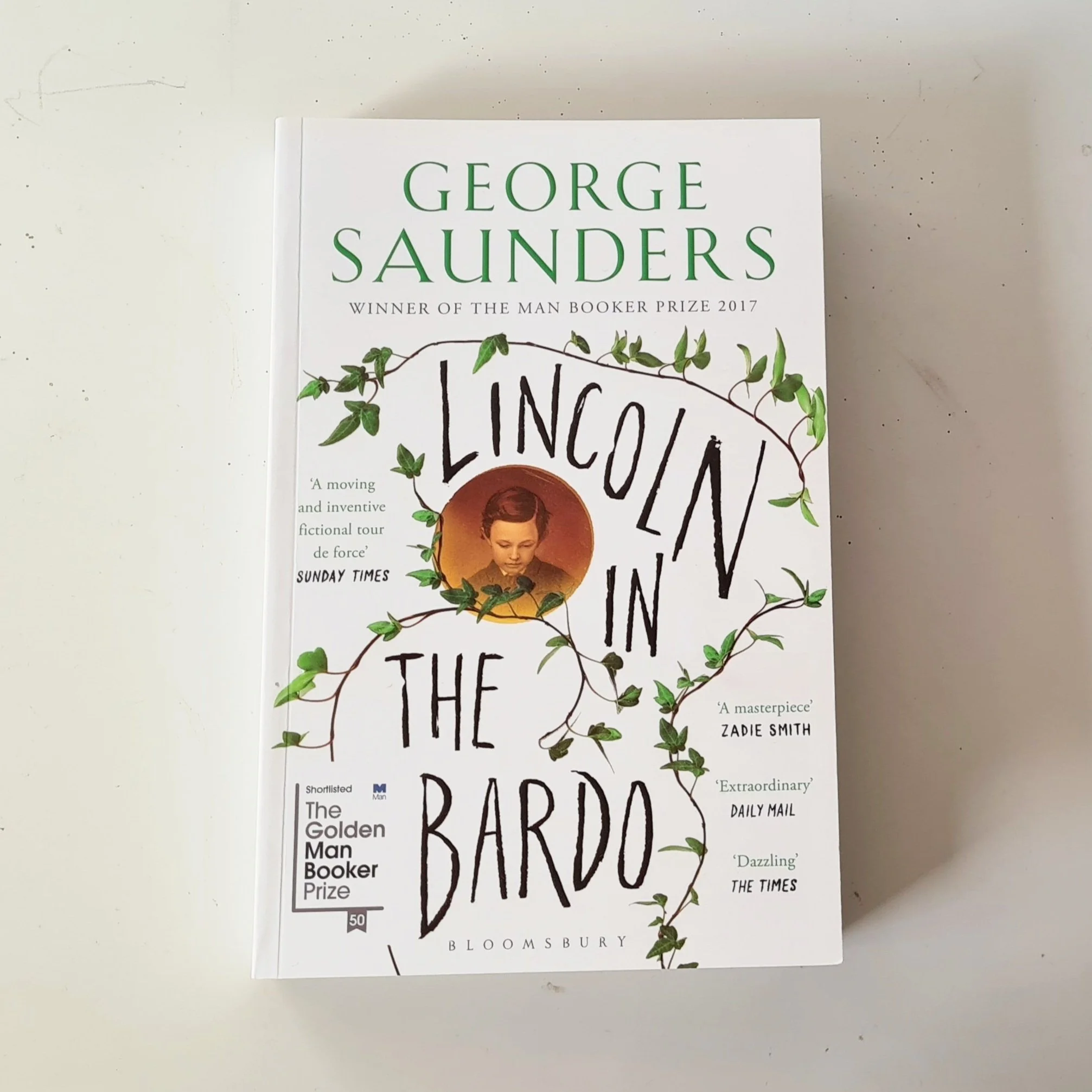
Lincoln in the Bardo (2017)
Lincoln in the Bardo focuses on the death of Abraham Lincoln's son Willie. It focuses (not sequentially) on the build-up to his death (in which the Lincoln's host a party while Willie lies bed-ridden), his death itself, and the aftermath, in which the grieving president visits his son's crypt and holds his body, all apparently based in historical fact. So far, so simple? Well… the above summary does absolutely no justice to what this novel actually is, which is a joyously unusual thing that mixes historical accounts (real and invented) of those events with a wild supernatural narrative set in the "bardo", a Buddhist term for the "intermediate state" between death and resurrection.