Vigil (2026)
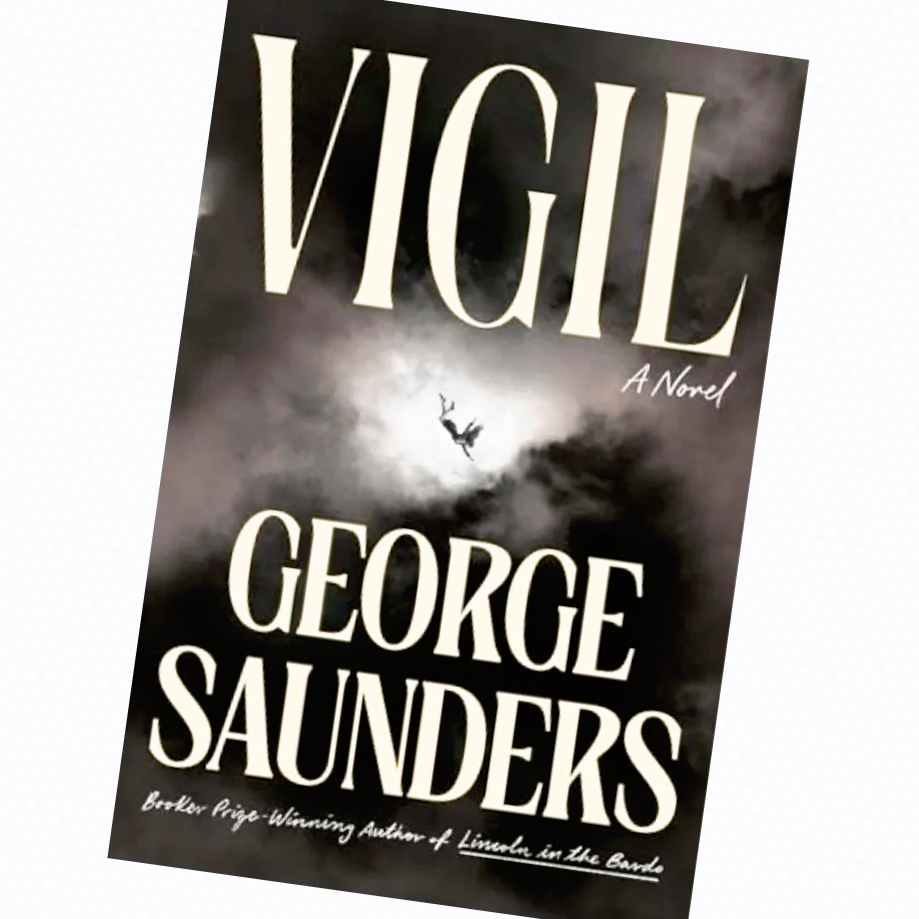
Why this one?
It’s the new novel (and only the second) by the author of my favourite Booker winner!
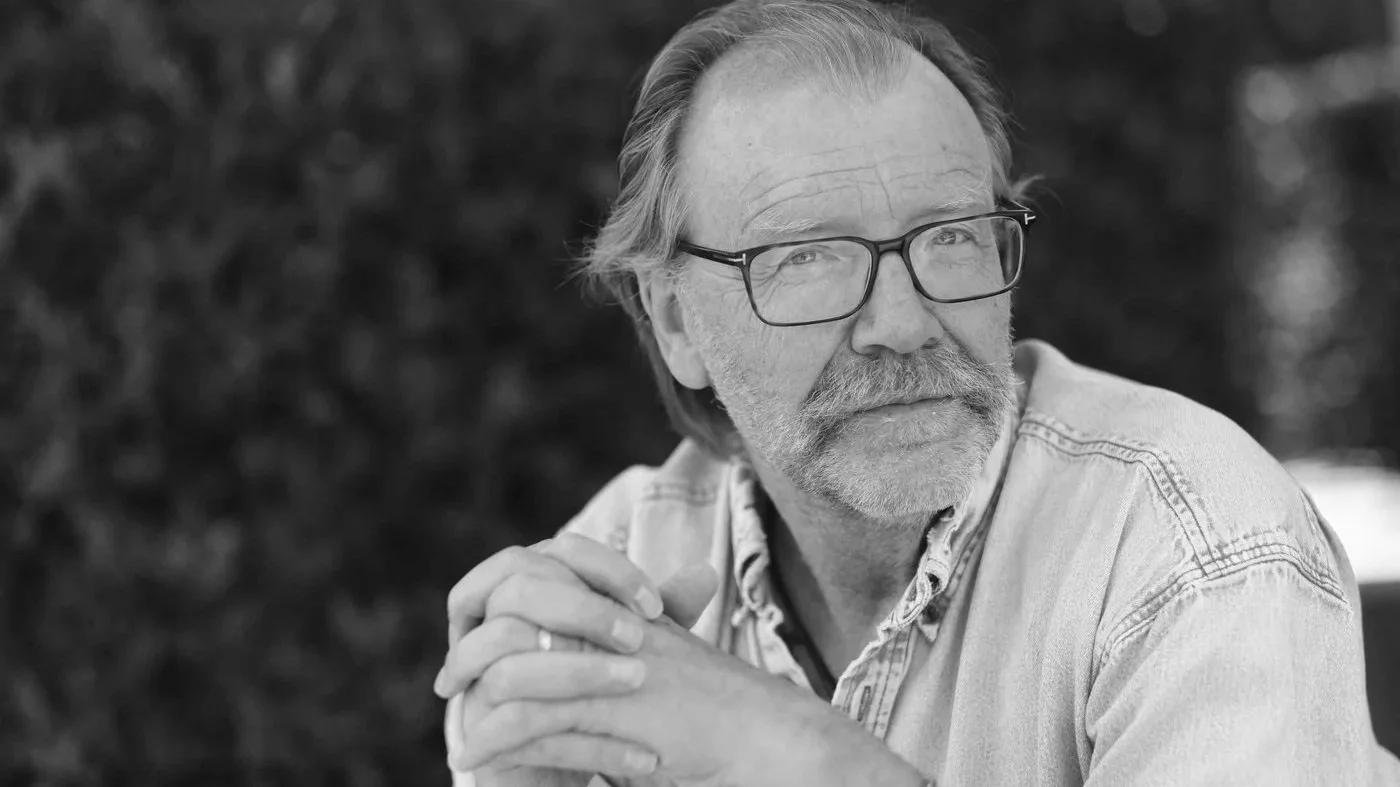
George Saunders (1958- ; active 1986- ) was born in Amarillo, Texas, USA. He grew up in Oak Forest, Illinois, near Chicago. His first degree was, unusually, a BS in geophysical engineering from Colorado School of Mines, though he took an MA in Creative Writing at Syracuse University in 1988, where he met his wife Paula Redick.
He began writing short stories, with his first published in 1986. His first collection CivilWarLand in Bad Decline wasn't published until 1996. In between his MA and this first book, he worked as a technical writer and geophysical engineer, while continuing to publish short stories. He has subsequently published three further collections of short stories, edited an anthology called Fakes, and written extensively for the likes of The New Yorker, The Guardian, Harper's and GQ. Having previously said he wouldn't write a novel, Lincoln in the Bardo (2017’s aforementioned Booker winner) was his first venture into the longer form. Prior to this, his most recent book was 2022’s story collection Liberation Day, which I also rather enjoyed.
He has taught an MFA class at Syracuse for over twenty years, and in 2021 published A Swim in a Pond in the Rain, a "literary master class" based on his classes on the art of the short story form, focusing on four Russian masters.
Vigil will be published by Bloomsbury in January 2026. Thanks to them and Netgalley for the ARC.
Thoughts, etc.
Vigil takes us back to what many have dubbed the ‘Bardoverse’, that being a kind of purgatorial netherworld inhabited by the dead that formed the primary focus of Lincoln in the Bardo. Here, though, the setting is the present day (or thereabouts) and instead of a graveyard we largely find ourselves at the bedside of a dying man, the powerful oil executive K. J. Boone. We are introduced to him through the eyes of Jill “Doll” Blaine, a young woman who died (in a rather unfortunate case of mistaken identity) in the 1970s, and has been sent to ‘comfort’ Boone through his dying moments. While she has been through this process more than 300 times in her afterlife, Boone represents an entirely new experience for her. He is an unrepentant architect of climate change, and even aside from that, a man with precious few redeeming qualities.
For better and worse, it’s by no means a straightforward retread of Bardo’s setup. In the latter, the deceased spirits that we encounter are the recently dead, confined to a graveyard where they refuse to accept their fate. In this limbo-state, they are crammed in with dozens of others of their ilk (to borrow a phrase from Jill) in a chaotic environment in which their bodies are grotesquely distorted in various (often comical) ways. Jill, by contrast, occupies a more established and ‘professional’ role in her afterlife, as do pretty much all of the other deceased characters we encounter in Vigil. Especially given the repeated use of the term ‘elevation’, it could be the case that the role Jill takes on is one in which she has transcended the status of those Bardo ghouls, and that the ultimate ‘reward’ is being given this purposeful role of comforting/guiding others in their moment of darkness. Or it could be the case that it’s just a totally different concept that happens to also deal with the afterlife (but that would be less fun!)
On the positive side, this difference in focus gives us a fresh perspective and not just a crowd-pleasing revisit. It also gives us more time with a single ‘dead’ character, in Jill Blaine, who is definitely an entertaining voice through which to view this world. In this story, she experiences significant character development, arriving to repeat a task she has performed successfully many times before, from a position of relative innocence and purity (having died young, she approaches the world from this relatively untainted perspective and begins the book with a touch of endearing naivete). Through her disgust at what she experiences in the mind of Boone, however, she is spurred into something of a reckoning with her own past, in which she discovers that those around her (mainly men) have not been quite so innocent - her murderer has lived a life free of consequences, and absolved himself of blame; the true love of her life moved on relatively quickly after her death. The combination of the encounter with Boone and her enhanced understanding of these elements of her own past leads her from the ‘angel’ like figure we first encounter to a far more assertive (and human) character who ultimately reveals herself capable of violence in pursuit of a kind of ‘justice’.
Elsewhere, I enjoyed the book’s more fantastical moments. There’s nothing quite on the level of pure chaotic surrealism that Bardo had, but there are still plenty of vividly rendered images of a fantastical world in which spirits both human and animal can appear, often in large quantities, reconfigure themselves and generally paint wildly entertaining pictures in our mind. Saunders’ deployment of these kind of fantastical elements in the service of hugely serious themes is clearly one of the many manifestations of his genius as a writer. Even in their more constrained format in this book, they still represent brilliant irruptions of joy and humour in an otherwise dark world.
There are, however, some aspects of this novel that make it harder to enjoy than his previous (in my view, near-perfect) novel. The first is that it is such a darker and less hopeful book than its predecessor. This is perhaps inevitable given the weight of the subject matter it’s contending with. Bardo was set safely in the past; Vigil is set in our doomed modern world. While the traveller from the near-future, Mr. Bhuti, gives us a glimpse of a ruined world, destroyed by changes to the climate wrought by the likes of Boone, his dispatches don’t come as much of a surprise. In fact, that’s partly the point: even faced with incontrovertible evidence, Boone is unable to be swayed into a deathbed moment of acceptance of his role in this scenario. It ultimately makes for a fairly gloomy read, if one that’s depressingly apt for our times. Those most at fault for our tragic fate are incapable of change; and the horror of this recognition spurs even the innocent ‘angel’ like Jill to become tainted (one might argue into a necessary violent activism, but again there is little joy in this outcome).
Arguably more significant, though, for me, was the relative lack of emotional weight. Because of all of the above, it lacks the heart of Bardo in which amidst the chaos and hilarity we also experience the raw grief of a man for his child, and the broad range of emotions associated with that scenario. In Vigil, there’s no real emotional anchor, and an overriding sense of emptiness as a result. It’s a book that deals with the grandest of tragedies, but one in which the weight of that subject tramples everything beneath it, leaving us with a book that’s easier to respect than to love.
Score
8
Despite this, it’s still evidently a joy to read at sentence-level. I also suspect it might benefit from a re-read, which I would consider if it makes any of the major prize shortlists. It’s also in a sense timely, but like Boone’s post-death pleas for forgiveness, perhaps also ‘too late’. Maybe that’s also part of the point.
Like the sound of this one? Buy it at bookshop.org.
(If you click through and make a purchase, I may earn a small commission from Bookshop.org at no additional cost to you, which helps support local independent bookshops. I’ll only share these links for the highest rated titles on the site. )
Next up
TBC.