
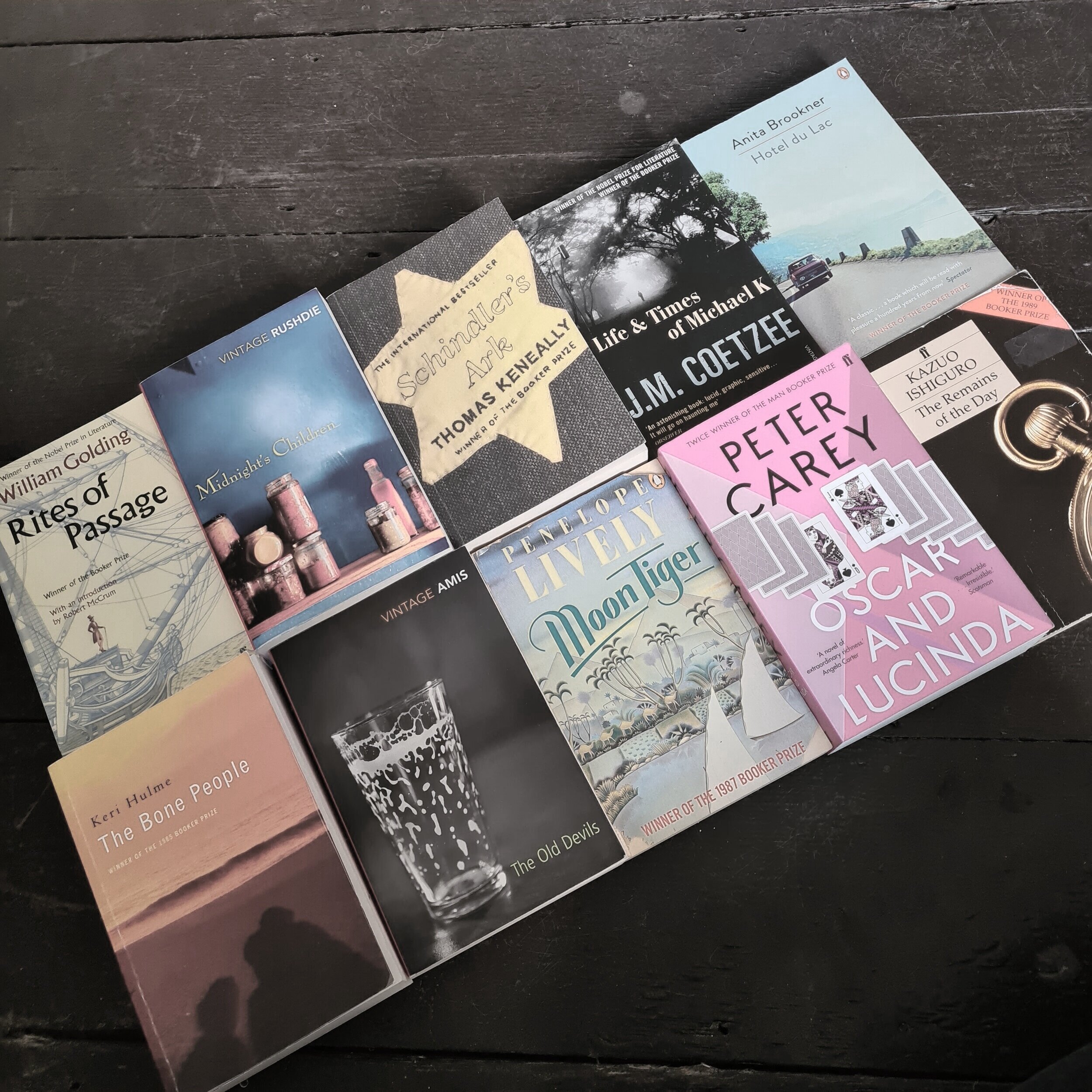

The Tiger’s Wife (2011)
The Tiger’s Wife is set in a semi-fictionalised version of the Balkans, on the border between two unnamed countries, and takes place through a sweep of the twentieth century, in a period notably covering the Second World War and the Balkan conflicts of the 1990s. Its central character is Natalia, a young doctor who is on a mission of mercy to an orphanage. In the present day, she finds herself facing the double mysteries of her suspicious hosts, who spend their time digging for something in the surrounding land, and of the recent death of her grandfather, who took himself to a remote village to die.

The Lacuna (2010)
The Lacuna focuses on the life of the fictional author Harrison Shepherd, beginning with his childhood in Mexico in the 1930s and taking us through to the 1950s., interacting with significant moments and characters of historical significance along the way. We learn early on that he has kept diaries for much of his life, albeit with some important gaps (one of the lacunae that the title alludes to) and while the narrative is largely told through his diaries, it is mediated by a curatorial presence, the initially mysterious “VB”, and also punctuated by press clippings both real and invented.

Home (2009)
Home is not a straightforward sequel to Robinson’s much-feted Gilead, but more of a companion piece, looking at a similar time period from different perspectives. In it, she shifts the focus to John Ames’ lifelong friend and friendly adversary in religious discussion, the Rev. Robert Boughton. It focuses primarily on three characters: the Rev. Boughton himself, who is aging and sick, and reflecting on his life and that of his family; his daughter Glory (probably the primary focus of this one) who has returned home in her late 30s, ostensibly to help him; and his ‘prodigal son’ Jack who arrives a little way into the novel following an absence of around twenty years.

The Blue Flower (1995)
The Blue Flower is set in the Germany of the late Eighteenth century, as Romantic sensibilities ferment in the great universities and clash with the traditional ways found in the small towns where much of its action takes place. At the centre of the novel is Friedrich von Hardenberg, a student of philosophy, rubbing shoulders with the likes of Goethe and developing his own ideas and poetry with which he will later find fame as Novalis. The novel’s short chapters provide insights into his unusual and contradictory life (alongside his poetry, he’s also taking on the running of a salt mine…) as well as those of his family members and contemporaries. Most strikingly, it details his captivation by the twelve-year old Sophie von Kuhn, a ‘normal’ girl offering little in terms of the usual expectations of the time (she’s neither financially nor intellectually his equal).

The Road Home (2008)
The Road Home focuses on Lev, a middle-aged widower from an unspecified Eastern European country (possibly Poland), as he travels to London with the goal of making money to support his young daughter who stays back home with his mother. The novel begins as one of survival, as Lev acclimatises to the harsh realities of living in London with no money and no job. He initially sleeps rough and makes small change delivering leaflets for a kebab shop, before landing a job as a dish-washer (or “nurse”) in the high pressure kitchen of GK Ashe, a fine-dining, Gordon Ramsey style establishment. He eventually finds himself a (child size) room with recent Irish divorcee Christy, with whom he forms an endearing friendship.

Erasure (2001)
Erasure focuses on the author Thelonius “Monk” Ellison. In the mid-1990s, we find him in a rut with his writing, tired of being told by those around him in the publishing industry that he’s “not black enough". He’s an academic and his work reflects his own interests, such as modern retellings of Greek satires, and pissing off those around him with provocations that are of deeply niche interest - such at his lecture which parodies Barthes’ S/Z in the style of Barthes’ S/Z (a provocation to the average reader of Erasure, too, when this lecture is reproduced in exhaustive detail early in the book!) Outside of his writing, he’s dealing with everyday realities of life: a mother succumbing to Alzheimers, a brother who comes out of the closet - destroying his marriage, and a sister who pays the ultimate price for her work at an abortion clinic.

Half of a Yellow Sun (2007)
Half of a Yellow Sun takes place in Nigeria in the years before, during and immediately after the Nigerian-Biafran (Civil) War (1967-70) in the decade following Nigeria’s independence from the UK in 1960. It focuses on three central characters: Olanna, the Igbo daughter of a wealthy businessman and eventually wife of Odenigbo, a Maths professor at the University of Nigeria in Nsukka; Ugwu, an Igbo village boy from Opi, who joins Odenigbo’s household as a servant (aged just 13) at the start of the novel; and Richard, the English expat and eventual partner of Olanna’s twin sister Kainene.

My Name is Lucy Barton (2016)
My Name is Lucy Barton introduces the New York-based author of its title. We find her recovering from an infection in hospital, where she is visited by her mother. Through their awkward but often moving interactions, and Lucy’s interior reflections, we learn - slowly, through drips of information - about Lucy’s troubled upbringing in the isolated rural town of Amgash, Illinois.

On Beauty (2006)
On Beauty, unlike many of Smith’s other novels, is set predominantly in the US - though still has a healthy focus on Britain (or at least Britain as represented by - once again - North-West London). It focuses on the intertwined lives of two families - the Belseys and the Kipps. Both have university professors at the helm, in the shape of Howard Belsey, a white English Rembrandt scholar (living with his African-American wife Kiki and three children in a fictional affluent university town near Boston, MA), and his nemesis Monty Kipps, a conservative Trinidadian initially living in London with his wife Carlene and two children.

Oh WIlliam! (2022)
Oh William! returns to life of author Lucy Barton, heroine of Strout’s 2016 novel. We find her a little later in life, having recently been widowed following the death of her second husband David. Much of this novel focuses on her relationship with her first husband William, who also remarried but is left alone again part-way through the book. Lucy herself is now a successful novelist, comfortable in New York and far away from her troubled childhood in Amgash, Illinois.

The Trees (2022)
The Trees is a vicious, riotous satire that deals with the subject of lynching in the US through the twentieth century. In Money, Mississippi, a white man is found brutally murdered - garrotted by barbed wire and castrated - next to another body, that of a mutilated Black man who looks curiously like Emmet Till, who was the real-world victim of a lynching in Mississippi in 1955, aged just 14. Several more deaths occur, with the same body appearing next to them. Soon, similar incidents are occurring across the whole of the US. The set up is one of a murder mystery, albeit one that initially seems to have potentially supernatural connotations.

Treacle Walker (2022)
Treacle Walker is a short and highly distinctive novel. In it, a young boy call Joseph Coppock, in recovery from illness and suffering from a lazy eye, has an encounter with the titular rag-and-bone man, with whom he makes a trade of his dirty pyjamas and an old lamb bone, receiving in return an empty jar of medicine and a donkey stone. In its few pages, Joseph encounters a naked ‘bog man’ named Thin Amren, sees characters from his Knockout comic leap off the page and join him in a reality-bending adventure involving mirrors and marbles, communes with cuckoos and learns via a visit to an optician that he sees different realities through his good and bad eyes.

The Seven Moons of Maali Almeida (2022)
The Seven Moons of Maali Almeida is structurally a murder mystery, albeit one with significant twist. In 1989, war photographer Maali Almeida finds himself in a highly bureaucratic version of the afterlife, in a kind of hinterland between life and passage to “The Light” in which he must solve the mystery of his own death in ‘seven moons’ (otherwise known as a week). It’s set against the backdrop of a particularly turbulent period is Sri Lanka’s troubled recent history, in which various factions including the Tamil Tigers, the marxist JVP, and the government’s own death squads are unleashing relatively indiscrimate violence on each other at a shocking rate.

Glory (2022)
Glory is a satirical allegory of the circumstances surrounding the end of Robert Mugabe’s decades of rule in Zimbabwe in 2017, and his replacement by his former Vice President Emmerson Mnangagwa. It uses a cast of animals in place of humans, enabling it to blend direct retelling of history with fantastical satire that becomes a broader commentary on dictatorships, tyrannical rulers, and the state of the modern world in general

Small Things Like These (2022)
Small Things Like These is simply a beautiful read. Its slim page-count contains a surprising amount of depth, both in terms of plot and emotional punch. The present-day narrative is set in mid-1980s Ireland, where coal and timber merchant Bill Furlong is preparing for Christmas with his wife and four daughters, as well as going about his work as usual, at a busy time of year. This work takes him to the local nunnery, which is a Magdalene Laundry site. His reaction to what he finds there, coupled with his reflections on his own upbringing as the child of a poor single mother, form the core of the novel and the impetus for its unifying theme.

We Need to Talk About Kevin (2005)
We Need To Talk About Kevin is told from the perspective of Eva Khatchadourian, a comfortably well-off former author and publisher of a series of travel guides. It’s structured around a series of letters she writes to her partner, Franklin, in the years after their troubled son Kevin killed nine people in a high-school massacre, and was subsequently incarcerated for his crime.

Nightcrawling (2022)
Nightcrawling tells the story of 17-year-old Kiara, a black girl living in poverty in Oakland, California. Her situation is unenviable: her father dead, her mother imprisoned for a fairly horrifying reason, and taking responsibility for both her feckless aspiring-rapper brother and her virtually abandoned young neighbour Trevor. In desperation, she takes to the streets, where she is eventually picked up and abused by a gang of truly repulsive police officers and eventually finds herself at the centre of a court case against the police force.

Booth (2022)
Booth is the story of the eponymous Booth family, across much of the nineteenth century. Ostensibly, it’s about the build-up to the assassination of Abraham Lincoln by the family’s most infamous son, John Wilkes Booth. But it’s really about much more than that. Its extensive scope touches on family dynamics, generational shifts, the Civil War and abolition of slavery in the US, the world of the Theatre in which the Booth family are embedded, and a whole lot more. Fowler began writing the novel while considering one of many recent mass shootings in the States: how might the perpetrator’s family be impacted? Her informative author’s note at the novel’s conclusion also highlights that she stopped writing for some time around the election of Trump, before realising that in writing Booth she was engaging with issues that were still very much present in the modern world.
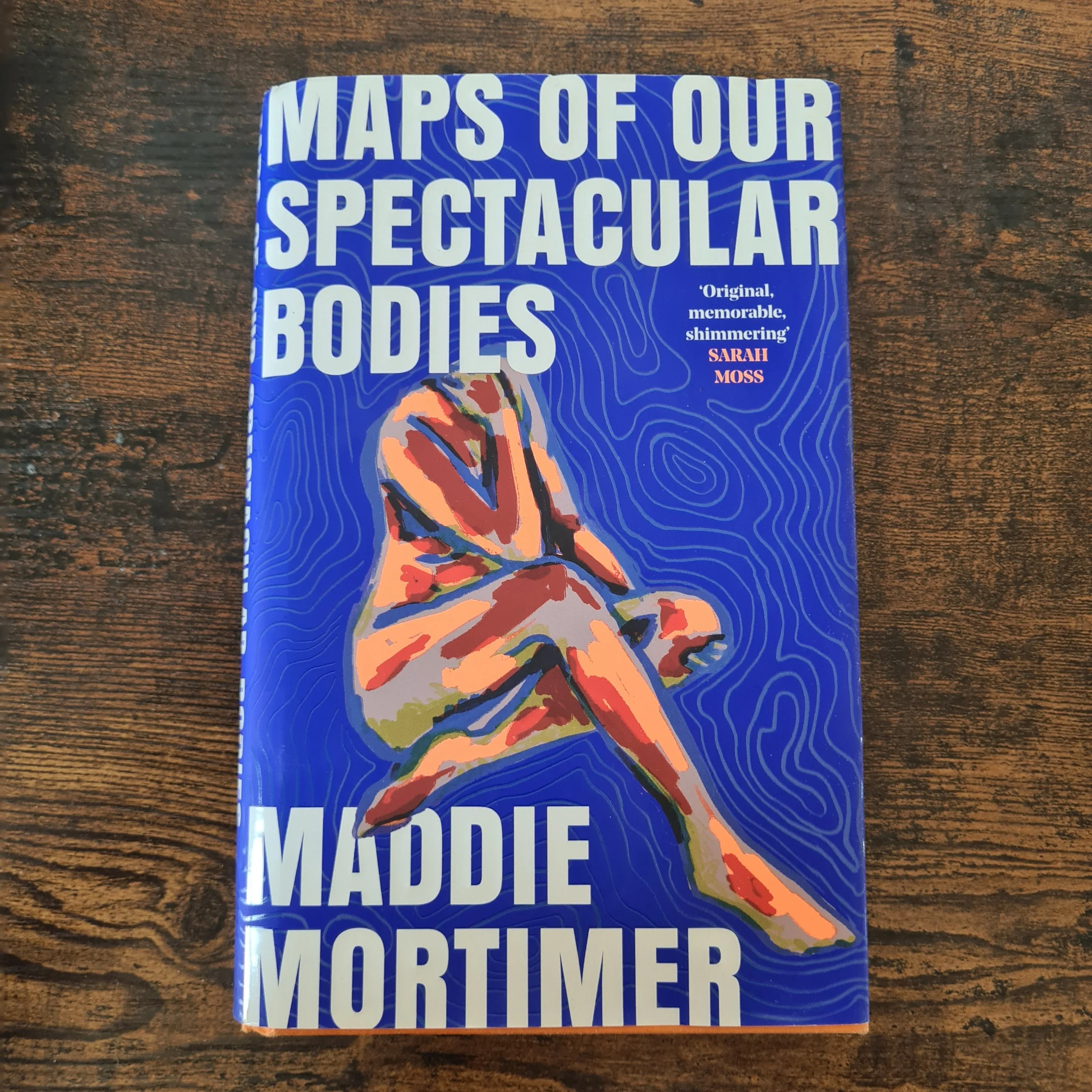
Maps of Our Spectacular Bodies (2022)
Maps of Our Spectacular Bodies is a unique read, flitting back and forth between its protagonist Lia (a mother, wife and creative who has just received a terminal cancer diagnosis) and an unnamed second narrator who may or may not be the cancer itself. It plays with the novel form both in this sense and in its heavy borrowings from the world of poetry, with the text often deviating wildly from novelistic convention and into visual / concrete poetry modes. It’s drawn from personal experience of losing a mother to cancer, and amongst the formal experimentation is a relatively familiar and yet deeply emotive story of coming to terms with (or failing to come to terms with) death and reflecting on life - both the good and the bad.

Small Island (2004)
Small Island is mainly set in 1948, in a London still rebuilding after the war. Its main focus is on four characters who end up living in the same house. They are the house’s owner Bernard Bligh, his wife Victoria “Queenie” Bligh and two of their lodgers, both recently arrived from Jamaica, Gilbert Joseph and Hortense, his wife. The novel jumps back and forward in time, with the “Before” sections covering the early life of all of the characters, including their wartime experiences.