
We Live Here Now (2025)
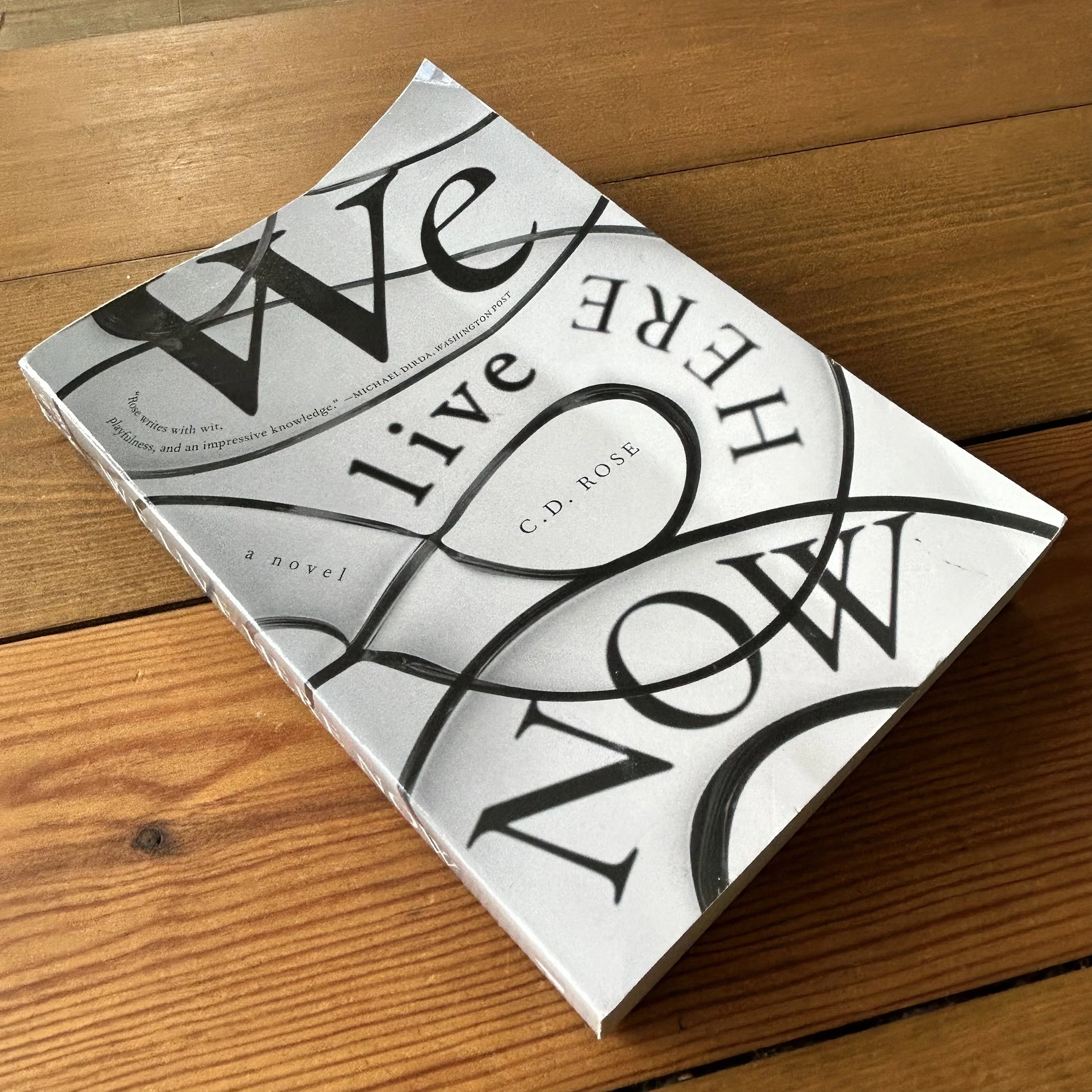
We Live Here Now is a set of fourteen short stories set in various corners of the modern world, connected (thematically and often more directly) by their positioning within the broad landscape of modern art and its intersection with commerce and capitalism. It begins with a fictional article by the critic Che Horst-Prosier about the equally fictional artist Sigi Conrad, who has disappeared following her most recent exhibition, which has become notorious for the apparent ‘disappearance’ of a number of its attendees. We are then introduced to twelve characters, seemingly all in some way connected to or impacted by Conrad, across the book’s stories, before most of the cast are reunited (for unclear reasons) in attendance at a mysterious talk, before we return to another article by Horst-Prosier on Conrad’s return, for an exhibition purportedly taking the form of a ‘Klein bottle’ (a device in which inside and outside are the same) and things get even weirder.

Audition (2025)
Audition is very much a novel of two halves. A cliche, and one which has come up more than once in my recent reading, but never more true than here. In its first part, we are introduced to an unnamed female narrator, preparing for a role in an upcoming play, in which she is notably struggling to nail a key scene. A young man, Xavier, meets her for lunch in an upmarket restaurant, having previously explained that he believes she may be his mother (a seeming impossibility as the narrator has never given birth). They are observed briefly by her husband, Tomas, an art critic, who seems somewhat weary of her affairs and is behaving a little shiftily himself.

The Book of Form and Emptiness (2022)
The Book of Form of Emptiness centres on Benny Oh, a young Canadian adolescent who has recently lost his father, the Korean-Japanese jazz musician Kenji, and now lives with his mother Annabelle. It is told by turns from the persepectives of a book (“the book”) and Benny himself, who debates with the seemingly autonomous book as it develops. Following the loss of his father (who was killed by a truck carrying live chickens as he lay passed out following a night smoking marijuana with his jazz band) Benny begins to hear voices in everyday objects. While initially harmless enough, following an incident with a pair of scissors who want him to stab his teacher, Benny is sent to a youth mental health facility. Meanwhile, Annabelle is struggling with the decline of her profession as a media monitoring researcher, and demonstrating (to Benny’s dismay) increasing tendencies towards hoarding.