Black Bag (2026)
Why this one?
Four books on the 2026 Booker shortlist that I’ve yet to read, and this was the one I was most excited to get stuck into.
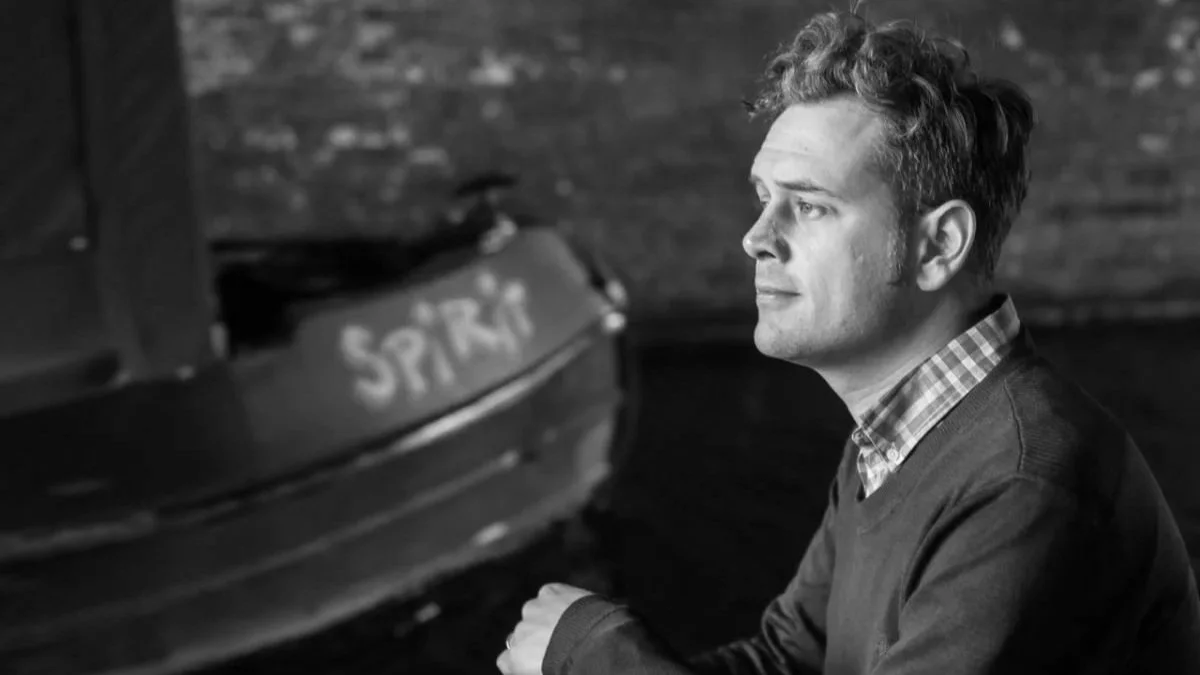
Luke Kennard (1981- ; active c. 2005-) was born in Kingston-Upon-Thames, London, England. He studied English literature at the University of Exeter, earning a BA, MA, and a PhD on prose poetry and absurdism. He is a professor of creative writing at the University of Birmingham, where his research focuses on contemporary poetry and surrealism. Outside academia, he has written reviews for publications including the Times Literary Supplement and served as ‘Canal Laureate’ for the Poetry Society and the Canal and River Trust.
Kennard's literary roots are in poetry, beginning with his debut collection The Solex Brothers (2005), which earned an Eric Gregory Award. His follow-up, The Harbour Beyond the Movie (2007), made him the youngest poet shortlisted for the Forward Prize for Best Collection, an award he later won in 2021 for Notes on the Sonnets. Expanding into fiction, his debut novel The Transition (2017) was longlisted for the Desmond Elliott Prize (a now discontinued award for debut fiction), and was followed by The Answer to Everything (2021), and Black Bag (2026), which marked his first Booker list appearance.
Thoughts, etc.
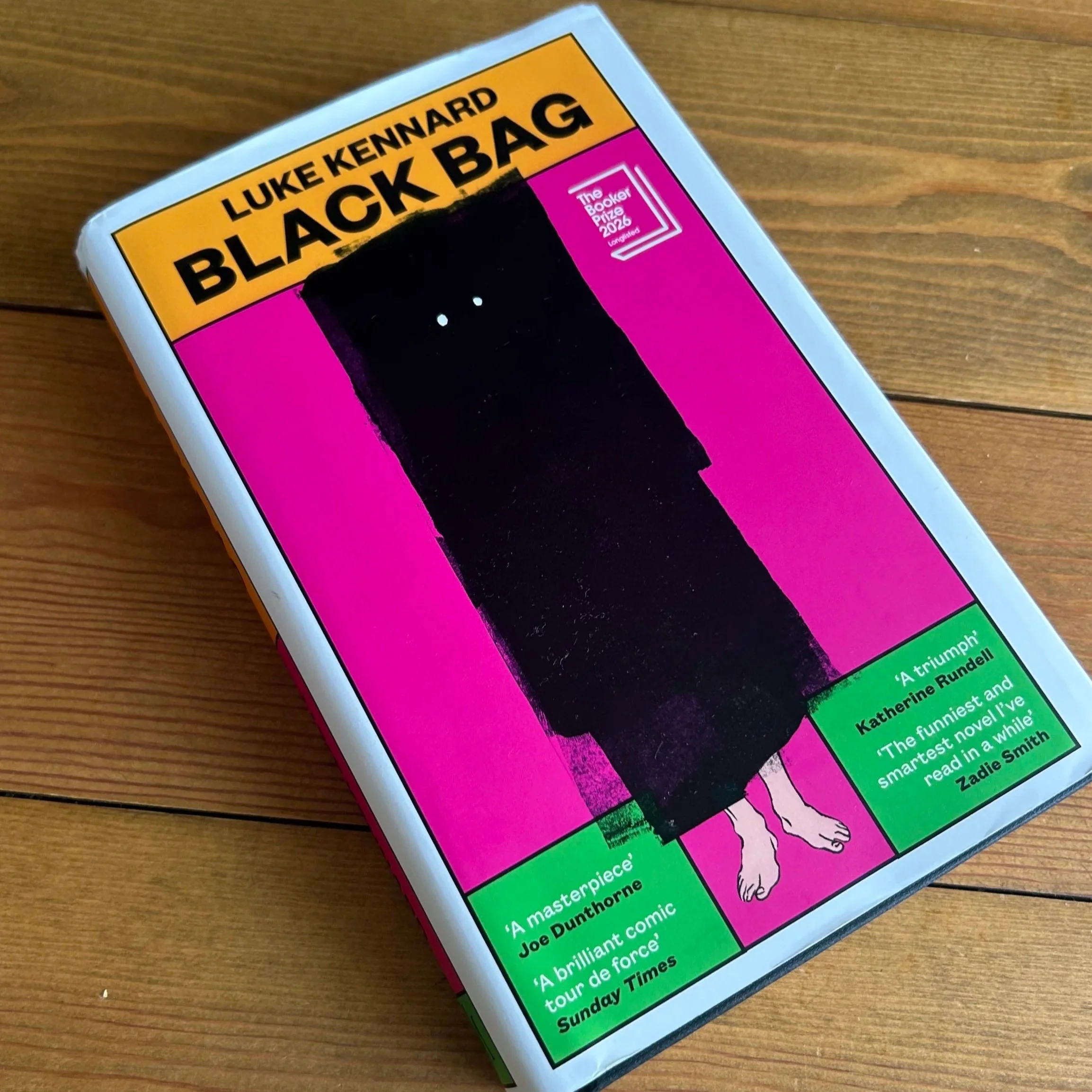
Black Bag follows an unnamed struggling actor whose career highlights to date have largely involved performing mid-meal mystery theatre to crowds of indifferent rich folks. He accepts a bizarre performance-based job posted by a university professor named Dr. Blend. Modeled on a real-life 1967 social experiment, the job requires him to zip himself inside a large black leather bag, and sit in silence at the back of a lecture theatre during Blend’s psychology classes. He is strictly forbidden from speaking or interacting with the students, serving merely as an anonymous object for the class to react to. As the experiment progresses, the protagonist finds comfort in the anonymity of the bag, eventually choosing to wear it outside of his required hours and adapting to its practical challenges and potential for social alienation. His fellow students, as proposed by the original experiment’s premise, after going through a phase of resenting his presence, ultimately come to respect and even like ‘Black Bag’.
During his working days, he stays over with his friend Claudio, a video-game streamer, who attempts to commercialize ‘Black Bag’ by minting cryptocurrency and selling merchandise around the "bag man". At the university, another professor, Justine Pearce, instigates a somewhat unconventional sexual relationship with the narrator in his ‘Black Bag’ guise. The book explores notions of modern masculinity, particularly the lonely and dehumanised existence of many of the author’s generation, either stumbling through life scraping a living in attempted ‘creative’ careers, stuck in the weirdness of modern academia, or embracing techno-capitalism and its bizarre money making schemes. The narrator ends up seeing the bag role both as an escape from all of this, and in some ways its ultimate symbolic representation - a submission to the demands of the modern world, removal of his own identity and retreat into a fantasy world (he constructs an elaborate if rather mundane alternative live living in a rural Swedish town). The book’s concluding sections see the narrator realising that he’s merely the latest in a line of Black Bags, and not in fact as unique as he might have up to that point believed.
This book grabbed me more than anything I’ve read in a long time. It’s energetically written, with a relatable protagonist adrift in a very familiar modern world. While its themes are weighty and timely, they are handled lightly and with a lot of humour, dark at times but largely just very dry. Its satirical targets are many and varied, with nobody in the book coming across particularly well, even if most of them seem to be doing rather better for themselves than our narrator. Claudio is the most emblematic of them all, as he throws himself headlong into modernity and attempts to extract as much cash as he can by understanding and using its tools, largely in order to spend that cash on reality-obliterating narcotics. The academic world depicted is little better, with students simply trying to tick-box their way through their degrees, and professors far more interested in exploring their own ‘academic interests’ (experiments of various kinds, social to sexual). The narrator himself, while relatively more sympathetic and self-effacing, believes that he’s found a way of transcending much of what he finds depressing about the modern world, but ultimately realises that he’s merely the latest in a long line of identical cases, who have now formed their own sub-society / cult, from which he is also excluded.
I did feel like the book raised more questions that it answered, but perhaps that was always going to be the case. It’s an absurdist look at late-stage capitalism, and particularly at the rather pathetic men that inhabit that world. The black bag is a blank canvas onto which people can project their own desires - notably, few people question the existence of Black Bag, rather simply using him/it as a sounding board for their own desires and/or theories of existence. The narrator finds comfort inside the bag, but it’s a comfort in submitting to external forces, to no longer needing to attempt to self-define or self-justify but instead allow others to use him for their own academic, social, sexual or commercial ends. He kids himself throughout that he’s found a higher artistic purpose inside the bag, but we’re not really fully convinced that he believes that, and isn’t content just to embrace his own slow erasure and submission.
Score
9
One of the most enjoyable reads on a page-by-page level, for me, for some time. It’s full of humour, thought-provoking in an open-ended sort of way, and contains some great imagery (that I can imagine would translate rather well on screen). I do think it slightly tails off towards the end, and doesn’t seem quite sure what (if any) point it ultimately wants to make. But it’s still a fun journey, an original creation and a refreshingly lively entry to the Booker canon.
Like the sound of this one? Buy it at bookshop.org.
(If you click through and make a purchase, I may earn a small commission from Bookshop.org at no additional cost to you, which helps support local independent bookshops. I’ll only share these links for the highest rated titles on the site.
Next up
The End of Everything.