North Woods (2023)
Why this one?
I can’t entirely remember why this was on my TBR list. I think probably a recommendation or two? If you recommended this to me and I forgot, sincere apologies!
Daniel Mason (1976- ; active 2002-) grew up in Palo Alto, California. He studied biology at Harvard University before earning a medical degree from the University of California, San Francisco. He wrote his debut novel, The Piano Tuner (2002), while still a medical student, drawing on his experiences spending time on the Myanmar-Thailand border. It was later adapted as an opera. He currently balances his writing career with his role as a clinical assistant professor in psychiatry at Stanford University, where his academic interests include the history of medicine and culture.
His subsequent books include the novels A Far Country (2007) andThe Winter Soldier (2018), alongside the short story collection A Registry of My Passage Upon the Earth (2020) which saw him nominated for the 2021 Pulitzer Prize for Fiction. 2023’s North Woods was a finalist for the National Book Critics Circle Award in 2023, and received a PEN Oakland/Josephine Miles Award in 2024. Earlier this year he published his latest novel, Country People.
Thoughts, etc.
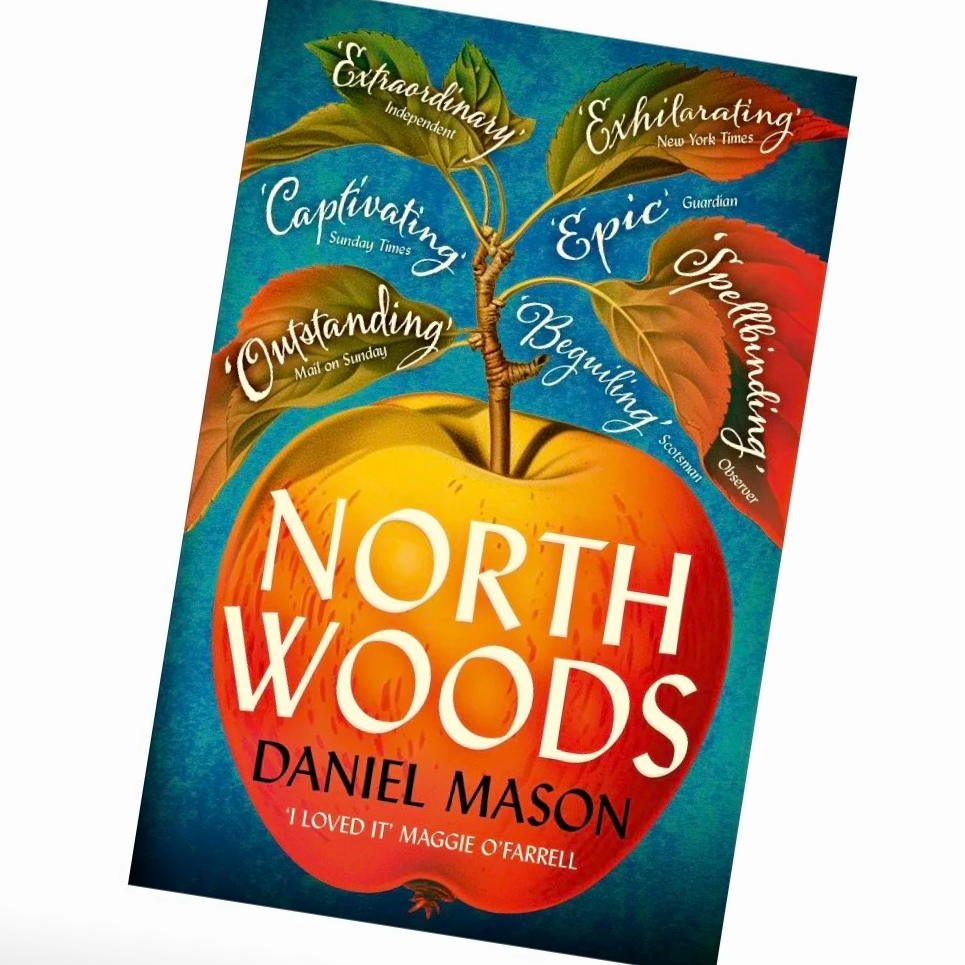
North Woods is the story of a house in New England and its inhabitants over the course of around 400 years, from the 17th century to sometime around the present day. It begins with the establishment of a cabin in the woods by a pair of Puritan lovers, and a tale of an unnamed woman fleeing war who poisons the soldiers chasing her. Perhaps most memorable, though, are the sections that follow next, largely in the 18th century, concerning the Osgood family. Charles, a soldier, moves to the area and renovates the yellow house, as well as establishing an orchard. He becomes a notorious ‘apple man’, famous across the region for his unique Osgood Wonder apples. When he is called up to fight once again, he dies fighting in the Revolutionary War and the house passes to his daughters, Mary and Alice. They live out their lives in an increasingly isolated and codependent fashion, with neither marrying. Their gruesome ending comes to haunt the house through the subsequent centuries.
The books subsequent sections included vignettes focusing on a fleeing slave; an artist who is conducting a clandestine gay relationship with a European author; a Victorian medium hired to help a subsequent inhabitant who is haunted by dreams of the two artists; a mother and her son, a schizophrenic who documents his imagined conversations with the house’s past inhabitants on videotape; and a closing section in which a visiting botanist dies in a car accident, and a depiction of her afterlife in which she communes with the house’s former owners, as in reality the house itself is being re-absorbed by the natural world that surrounds it.
I’ve probably said a few times before that I love a novel with a grand historical sweep, which was almost certainly why a person or persons felt I would enjoy this. They certainly weren’t wrong either. Generally of course these kind of books will focus on a character over time, or perhaps in the more ambitious cases a family, so the focus on a house - its origins, accumulation of layers both in the physical sense and the historical (manifesting as the sense of ‘haunting’ that builds up over the sections), role in the history of the region and the nation in which it sits, and ultimate surrendering back to nature all make for a rather unique and compelling story which finds in the ordinary something that in its totality feels epic, majestic and very powerful.
The book’s characters are generally brilliantly drawn, each with their own memorable idiosyncrasies and varied connections to the house. Very early in the book, the house’s story becomes overtaken by violence and chaotic forces, human conflict within and attack from outside by forces of war, the animal kingdom, weather-battering and nature-borne decay. Elements of this turbulent history become bound up in the house’s physical features (and in some cases quite literally buried under its floorboards). There’s a deliberately seasonal aspect to the novel’s structure, one of many tricks that give the books its sense of the encompassing of all our worldly concerns (and then some beyond). The parts I found most captivating were those in the house’s ‘springtime’ of its life, with the Osgoods’ thriving apple business and its subsequent rotting away in the heat of early summer. Throughout there’s the sense of the natural world and its rhythms driving the course of events that impact the house and its memorable inhabitants.
Later in the book, I found the troubled story of Robert, the schizophrenic who is haunted (without being able to articulate to anyone else) by the past history of the house. He feels attacked by imaginary forces which have their roots in the house’s past, and dedicates much of his life to attempts to control these forces through various processes - a meticulous series of walks he takes around the area, in a process he names ‘stitching’ (something of a metaphor for the book’s own attempts to stitch together the complex history of the many forces acting on the house over the centuries), and which we later learn involves the video documenting of his imagined communings with other characters associated with the yellow house’s history. This is one of several form of engagement with the house’s past that come to dominate the book’s later sections, in which we find stories dug up (sometimes, again, literally) by journalists, amateur historians and writers for salacious ‘true crime’ publications. Documents accumulate and eventual start to engage in a metatextual exploration of previous documents, questioning the stories we initially receive as fact and further complicating the house’s already elaborate history.
It’s a book with a real sense of magic and wonder (like the apples….) about it, and one which did keep me very much engaged throughout its varied sections. I had a few minor issues with the book’s structure, which I suppose are inevitable parts of the format of its construction but still made a bit of an impact on my perception. First is that for me the energy and exuberance of many of the book’s early sections is not quite matched by anything in its middle or closing sections. This is partly because I think these sections depict the house in its heyday and everything that follows is the depiction of its decline and eventual journey back to the elements, but it still left me feeling that there was a bit of unevenness about the thing as a whole. And this, for me at least, isn’t helped by the ending, which felt a little too airily ‘spiritual’ for my liking. By this point, the book has rather overdone the ‘ghosts of the past’ metaphor already, so bringing that back in a more apparently ‘real’ sense to round out the book felt a bit unsatisfying to this reader. I guess, though, that like much in this multifaceted and layered novel, we aren’t supposed to take this at face value.

Score
8
Very much up my street in its scope and ambition (for the most part impressively delivered on), with some brilliant sections but a little let down by a slightly uneven structure.
Like the sound of this one? Buy it at bookshop.org.
(If you click through and make a purchase, I may earn a small commission from Bookshop.org at no additional cost to you, which helps support local independent bookshops. I’ll only share these links for the highest rated titles on the site. )
Next up
TBC.