Switzy (2026)
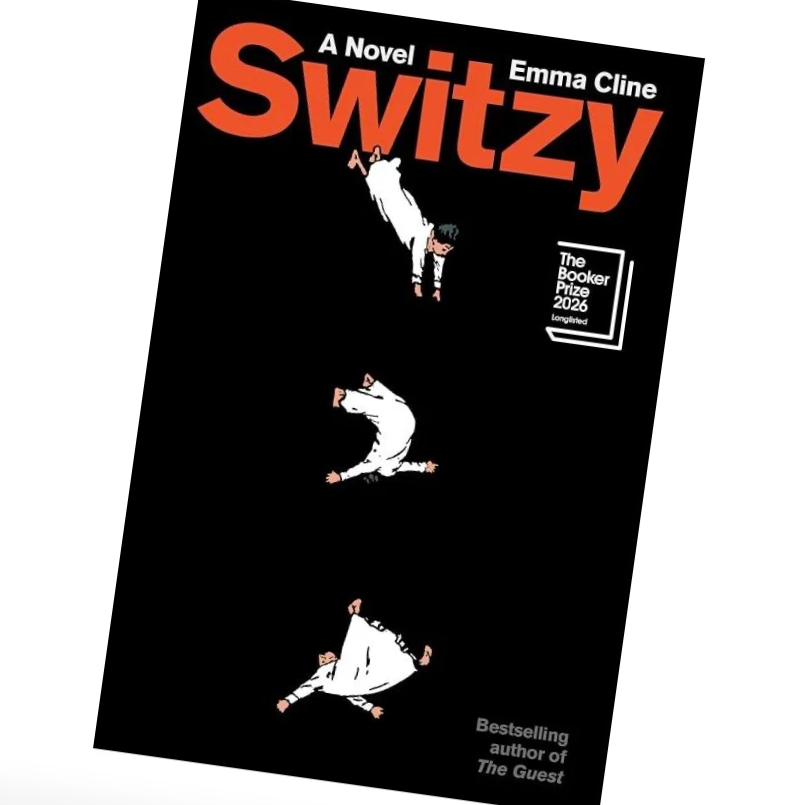
Why this one?
I’m reading some selections from the 2026 Booker Prize longlist and since I was lucky enough to get this as an ARC (thanks to Netgalley and the publishers) I thought I’d jump straight in.
Emma Cline (1989- ; active c. 2013-) was born and raised in Sonoma County, California, as the second of seven children in a winemaking family. After attending Sonoma Academy, she studied art at Middlebury College in Vermont, winning a college fiction prize during her first year. She subsequently earned a Master of Fine Arts degree from Columbia University in 2013. While at Columbia, she published the short story "Marion" in The Paris Review, which earned her the magazine's Plimpton Prize in 2014.
Cline’s debut novel, The Girls (2016), based in part on the Charles Manson cult, was a major success. A New York Times bestseller, it also won the Shirley Jackson Award, and was shortlisted for the National Book Critics Circle John Leonard Prize (for best first book). A movie production is in development. Her subsequent works include the short story collection Daddy (2020) and the novel The Guest (2023). Her short fiction and essays have been featured in The New Yorker, Granta, Tin House, and Harper's Magazine. Over her career, she has been named a Guggenheim Fellow and in 2017 was one of Granta's Best of Young American Novelists. Switzy will be published by Random House in September 2026 and marks her first appearance on the Booker longlist.
Thoughts, etc.
Switzy focuses on the final journey of David, a retired high-flying business executive. Suffering from dementia and dependent on the help of his young assistant Cody, he has made one final decision which will take him to a clinic in Zurich, Switzerland. Along the way, via flights on a borrowed private jet, he will visit his estranged daughter and her nine-year-old son in London, and meet an old friend in France near the Swiss border. His mind deteriorating, he reflects on his life in fragments (repeated phrases from childhood books, films and lessons pepper his present-day thoughts) and distracts his mind with repeated games of solitaire on his phone.
This book achieves something rather wonderful in the way it articulates David’s condition. His command of language, understanding of his immediate predicament and grasp of the larger sweep of long-term memory are all rapidly disintegrating, and yet Cline finds a way to put this across in writing that is both believably reflective of that disintegration and yet still surprisingly coherent, and packed with layers of meaning. The narrative is told from a third-person perspective, albeit one which has deep access to the workings of David’s mind, which initially feels unusual for such a personal story but in reality is an ingenious tool both for reflecting David’s increasing alienation from himself, and also allowing insights that are perhaps slightly beyond what a straightforward rendering of David’s thoughts would give us. Yet it never strays into the territory of explaining, it adds only what it necessary to show us the reality of his condition.
It’s not an easy book to read, as you can probably imagine. While none of what happens to David in the book is especially shocking, most pages contain a degree of heartbreaking pathos as this once-successful man is shown having to depend on others to function even on a basic level. And throughout the book there are instances where David almosts gets to view life from beyond the grave, watching those around him continuing with their lives, seemingly unaffected by his absence. What’s also quite moving about the book is that there’s very little in it that makes you want to question David’s decision to head to the clinic. His life seems hard to bear, so his conclusion feels logical, if coldly so.
What it also does very well is subtly nudge at questions of meaning and purpose more generally. When David digs out fragments from his life, very few of them relate to moments of triumph or success (of which, in the conventional sense, we presume he must have had many throughout his high-flying career). Instead, they’re tiny moments of joy - of being helped, finding beauty in art, or making a breakthrough in communication with a loved one - or in one case, as with his old ‘friend’ Tom, a sense of what he might have missed in life. When he has slight moments of doubt about his choices at the end of the book, again they are about the finality of certain sensory experiences of the world, a brief sense of joys not fully appreciated through the rest of his life, rather than any grander loss.
Ultimately his whole journey acts largely as confirmation of the correctness of his decision to end his suffering, but tinged with regret about opportunities missed previously in life. His last journey has been scheduled around trying to make small amends to these failures, but they’re ultimately futile: his daughter (unaware of the extent of his condition) has more important things going on in her life; his friend Tom - the source of so much instrospection, guilt and meaning in David’s repetitive thoughts - has moved on to such an extent that David’s visit carries virtually no meaning at all to him. In the visit to the daughter, her young son’s carefree movement through the routines of childhood feels like an unspoken further gut-punch, the innocence of a mind that could not potentially comprehend David’s position. It’s all incredibly sad and moving stuff, but brilliantly handled throughout.

Score
9.5
Hugely moving and memorable, with a difficult and potentially hard to articulate subject matter handled with impressive clarity and warmth.
Like the sound of this one? Buy it at bookshop.org.
(If you click through and make a purchase, I may earn a small commission from Bookshop.org at no additional cost to you, which helps support local independent bookshops. I’ll only share these links for the highest rated titles on the site.
Next up
I’m giving the new Marlon James a go I think. I may be some time…