The Disappearers (2026)
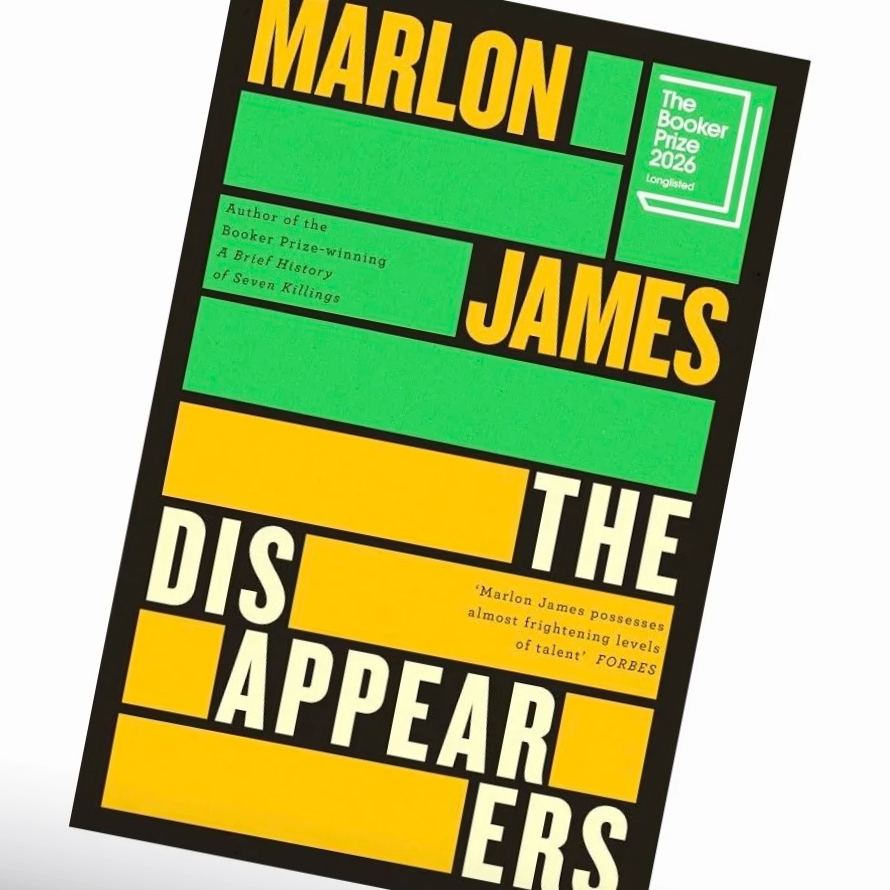
Why this one?
I’m reading some selections from the 2026 Booker Prize longlist . James’ previous Booker winner was one of my favourites, so had to get into this one as soon as possible. Handily Netgalley came through with an ARC, for which I am very appreciative!
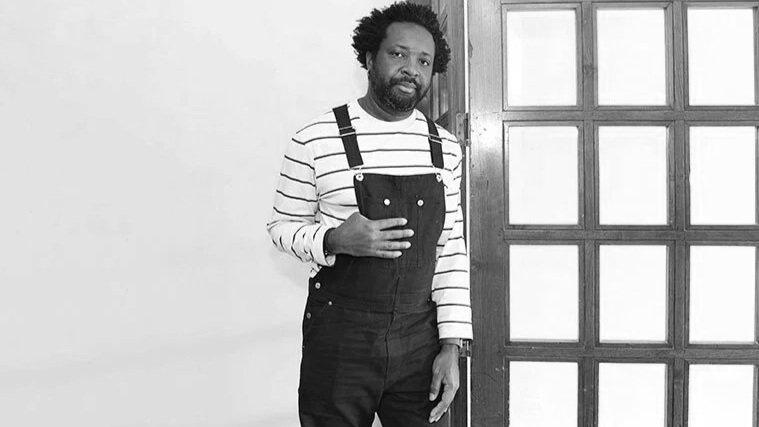
Marlon James (1970- ; active 2002-), was born in Kingston, Jamaica. His parents were both members of the Jamaican police, and devoted readers who influenced his love of literature. He attended Kingston's Wolmer's Trust High School for Boys and graduated from the University of the West Indies with a degree in Language and Literature. He is openly gay and left Jamaica in part because of fear of continuing homophobia in the country.
His first novel, John Crow's Devil (2005) was rejected 70 times before being accepted for publication. His second, the acclaimed The Book of Night Women (2009) details a slave woman's revolt in a Jamaican plantation in the 19th Century. A Brief History of Seven Killingswas his third novel and won the 2015 Booker Prize. He has since published the first two installments of a planned fantasy trilogy, starting with Black Leopard, Red Wolf (2019), co-hosted a literary podcast with his editor Jake Morrissey, and written the HBO/Channel 4 TV series Get Millie Black.
Thoughts, etc.
The Disappearers takes as its starting point a 1988 clandestine theatre group, a rather disparate selection of local gay men who answered the coded call to audition for a production of Canadian playwright John Herbert's prison-set drama, Fortune and Men's Eyes, directed by the veteran Cambridge-educated Havelock Titus. Its first section is narrated by the white-passing Belgian-Jamaican youth Eddy Porteous, who has (compared at least to his peers) a relatively straightforward home life, and sits kind of on the periphery of the group, some of whom have prior connections and are at least generally more immersed in the real-world realities of living as a gay man in Jamaica. He develops a fascination with the beautiful half-Chinese Mat Chin, and begins to notice the difficulties experienced by another fellow actor, Jordan Brown. By a quirk of fate, Porteous misses the rehearsal on the night when it is overrun by a bloodthirsty homophobic mob, inspired by (and ring-led by) the local dancehall artist Streggeh Don, whose hate-filled hit ‘Batty is not Pussy’ has become something of an anthem for many of the worst elements of Jamaican society.
One member of the troupe is brutally murdered, another has his eyes gouged out, and all the others present are seriously hurt, as well as traumatised by the incident. While the survivors recouperate in a private hospital (funded by a very morally questionable local politician who has been employing the services of Jordan Brown and likely wants to keep his name out of the press) two of them, Mat Chin and Orrin Turner, ultimately do not return to their normal lives and become the titular ‘disappearers’. Porteous, despite fortuitously missing the atrocity, has developed a form of survivor’s guilt and devotes himself to trying to find out what has happened to the pair, accompanied at times somewhat reluctantly by Jordan, who takes on a bigger role from this point. The later parts of the book cover the survivors’ various ways of coming to terms with the events of the past, some of which involve distancing themselves from this traumatic part of their history, and others developing a lifelong obsession with the events of 1988 and returning to them in attempt to make sense of their lives.
Most notable among them is Jordan, whose initial attempts to put the events out of his mind are flipped when in the mid-90s he encounters one of the attach perpetrators (who we had briefly heard the voice of in the section of the attack, as a self-hating closeted gay man who is trying to use violence against others as a way of purging his own ‘wrong’ desires) in a gay club. The latter doesn’t recognise him, and Jordan forms a twisted relationship with the man, which he ultimately uses as a way of enacting horrific revenge on his former aggressor. This forms the beginning of a descent, in which more of the attackers, including ultimately (and horrifically) Streggeh Don himself, are sought out and ‘brought to justice’ by Brown, whose mental state by the late 90s when this takes place is pretty much shot.
We also hear extensively from Havelock, who details his own complex life both in and out of Jamaica, including a memorable section told in a series of letters in which he details aspects of his life in England in the 1970s. His character, while attempting to stand back from the ongoing dramas that persist after the attack, gives the narrative a broader perspective, taking in an even wider sweep of gay history in Jamaica, and bringing in AIDS, another event with roots in the 80s that has cast a long and dark shadow over the community, creating legions more ‘disappeared’ men over the course of the subsequent decades. Havelock himself is positive, but benefits in the early 2000s from the increasing success of medication in tackling the disease and prolonging life for its victims. While some characters have clearly lost their battle to overcome the trauma caused by the crises of the past, others end the book in a position of relative stability - albeit largely those who have effectively erased their own identities in one way or another in order to escape their history.
This is a long and brutal book, which punishingly and unflinchingly exposes a long and horrible history of homophobia in Jamaica, something James himself is all too familiar with from his own upbringing. Unlike his previous Booker winner, which was genuinely polyphonous and sprawling in its range of characters and locations, often confusingly (if often thrillingly) so, this one maintains a focus and clarity through its length. It begins with a cast list, much like A Brief History of Seven Killings, giving rise to the feeling that it will be similarly broad-based and challenging, but while there are many characters in the book, few of them are significant, with the book instead tightly locking in to the crew of protagonists directly impacted by the 1988 attack and never letting the lens drift too far away from its focus on the long and often disastrous consequences of the events of that one night.
It’s not without its flaws. It is long and at times repetitive in its telling and retelling of the same critical incidents. It works for its intent, but it doesn’t always make for the most engrossing reading experience. It regularly catches fire and moves forward at such a pace that you hardly notice its length, but in some sections it undoubtedly shows signs of bloat and leaves you wondering whether its tightness of focus might not have been better served by at least a slightly more restrained approach. But then I guess that wouldn’t Marlon James, who tends to go for maximalism in a way that makes him unique.
I was also somewhat unsure about what the book was doing with music. It is rightly angry at the world birthed by the likes of Streggeh Don (a fictional creation, but one whose proximity to the real world is emphasized repeatedly, not least by occasional mentions of the name of Shabba Ranks - very much of the real world, once globally popular but rightly shut down on the global market for his vicious and public homophobia), and seems to offer in its early chapters some better musical worlds for its characters to escape into. Porteous is obsessed with Prince in the first section, which feels very deliberate to reflect escape into the purple one’s world of everything-fluidity, sensual abandon and rejection of conventional roles. Brown’s slightly more improbable interest in grunge in the third section feels slightly weirder though. One reading I guess is that Cobain’s death, which opens that section, marks the end of a relatively hopeful chapter in that particular musical landscape, which itself soon reverted to hyper-masculine chest-beating in the aftermath of the demise of the more feminine-coded (and feminist) Nirvana frontman. But I’m not sure it entirely comes across, and the seeming abandonment of these musical themes in the later parts of the book isn’t done for an immediately obvious reason (though could of course be deliberately symbolic of the passing of the hopeful, fluid and adventurous spirit of the 80s and early 90s).
It is extremely graphic throughout, whether covering any and all flavours of sex, varying degrees of (ultra)violence, the consequences of diseases and injuries (both physical and mental) or matter scatlogical. It’s emphatically obvious that this won’t be a book for everyone. But it’s a format that feels absolutely necessary for the subjects it deals with - nothing less that a fully honest depiction of reality would suit James’ intent in laying down the truth and excoriating generations of perpetrators of hatred and violence in his home country (and more widely). This is a book in the tradition of the ‘grand sweep’, covering an extended period (particularly when we include Havelock’s history) and bringing with it the usual thoughts about the passing of time, those we’ve lost along the way, and aspects of ourselves and our world that have changed. But alongside aspects of this typical elegiac mode, there’s much more anger in James’ take on this genre. It’s time as an accumulation of wrongs, a gradual piling up of atrocity, and ultimately of change coming too slowly for many of its participants. It’s also in some sense about time failing to simply ‘pass’, but instead persisting, keeping victims trapped in the worst moments of their lives as the world around them moves on.
Score
9
Brilliant as expected. Even more brutal than A Brief History but more coherent in its storytelling, at times it feels overlong but ultimately very much worthwhile. A strong contender for this year’s shortlist, you’d have to say.
Like the sound of this one? Buy it at bookshop.org.
(If you click through and make a purchase, I may earn a small commission from Bookshop.org at no additional cost to you, which helps support local independent bookshops. I’ll only share these links for the highest rated titles on the site.
Next up
John of John, which I’m excited to finally get around to!