
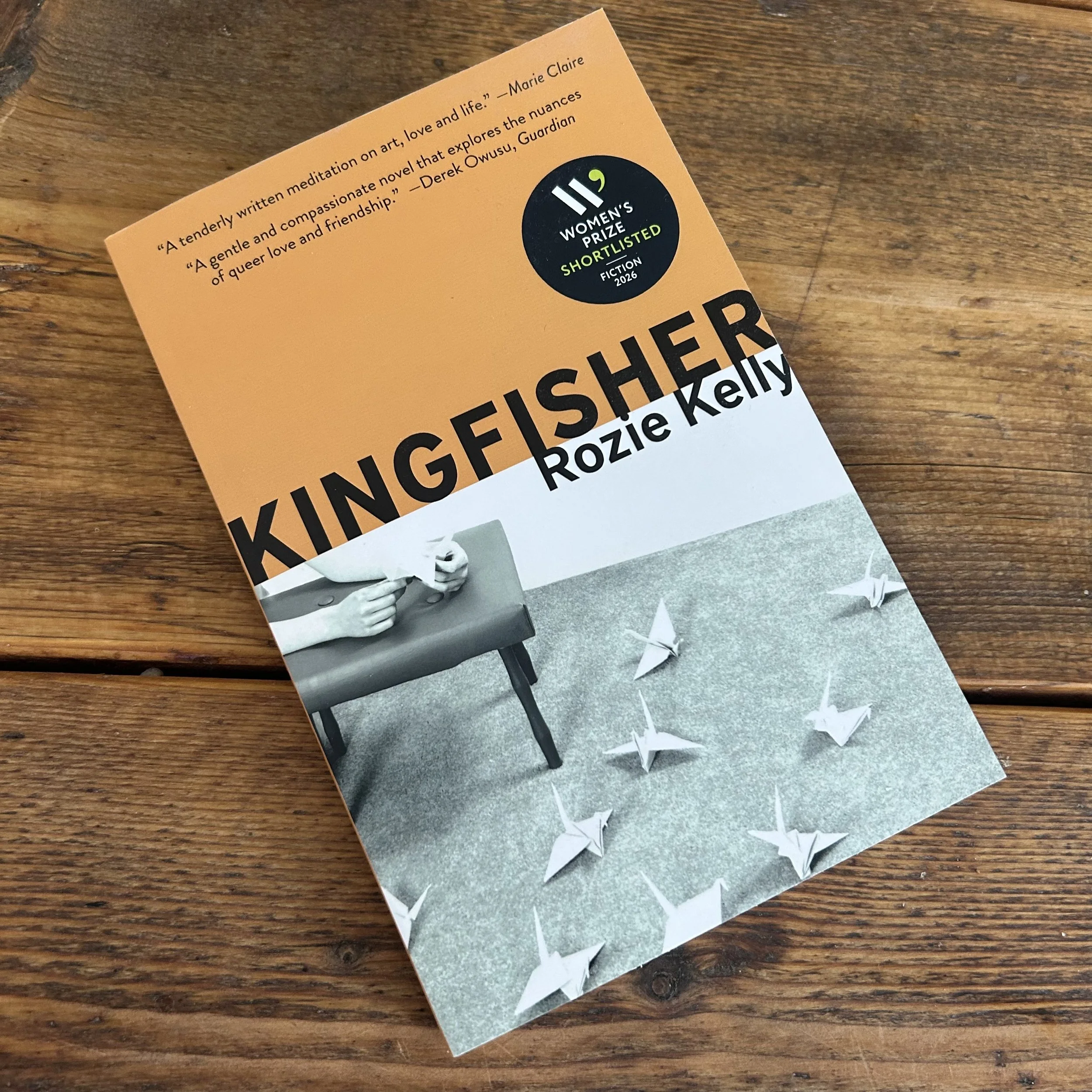
Kingfisher (2025)
Kingfisher tells the story of an unnamed queer man, a writer and university employee whose relationship with his partner Michael (a successful gym entrepreneur) is falling apart at the same time as he becomes obsessed with a female colleague (and far more successful writer) known as ‘the poet’, with whom he begins a complex relationship. His mother, Hetty, treated him badly in childhood in ways that are not fully explained and persists in expressing her homophobia. She is in a nursing home and he occasionally makes grudging visits to her with Michael. As the book develops, he ends his relationship with Michael and spends more and more time with the poet. Hetty becomes critically ill and the narrator decides against seeing her before her death, but as the poet suffers a re-emergence of her prior breast cancer, he effectively becomes a carer to her. Their complex relationship becomes the inspiration for him to restart his writing and leads to him securing a significant book deal.
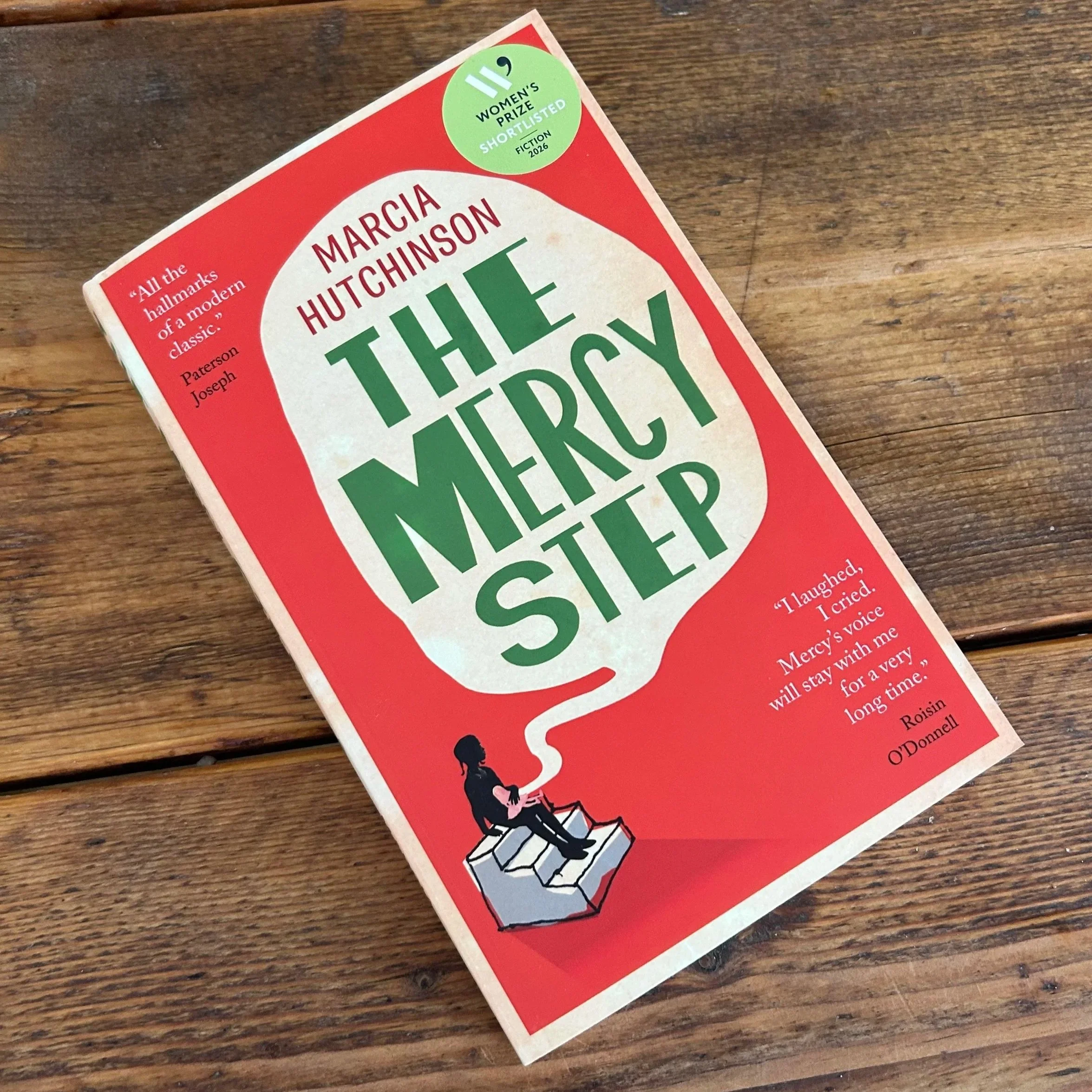
The Mercy Step (2025)
The Mercy Step is a coming-of-age novel focusing on Mercy Hanson, the daughter of Windrush generation immigrants, from her premature birth in 1962 in Bradford through to her early teens. The book is narrated from Mercy’s perspective, starting in the womb and then in early months in hospital with ‘New Monya’. From an early age, she’s evidently a gifted and perceptive child and feels disconnected from the rest of her siblings, instead finding solace in chats on her ‘mercy step’ with her Dolly. She nonetheless feels closely tethered to her mother, a bond which is tested throughout the book by her inability to fight back against her abusive and generally unpleasant husband, Mercy’s Daddy, by her blind devotion to her religion, and by the general strains of being a struggling mother of many children. By the end of the book we find out whether she’s able to cut the cord from her mother and make her own way in life.
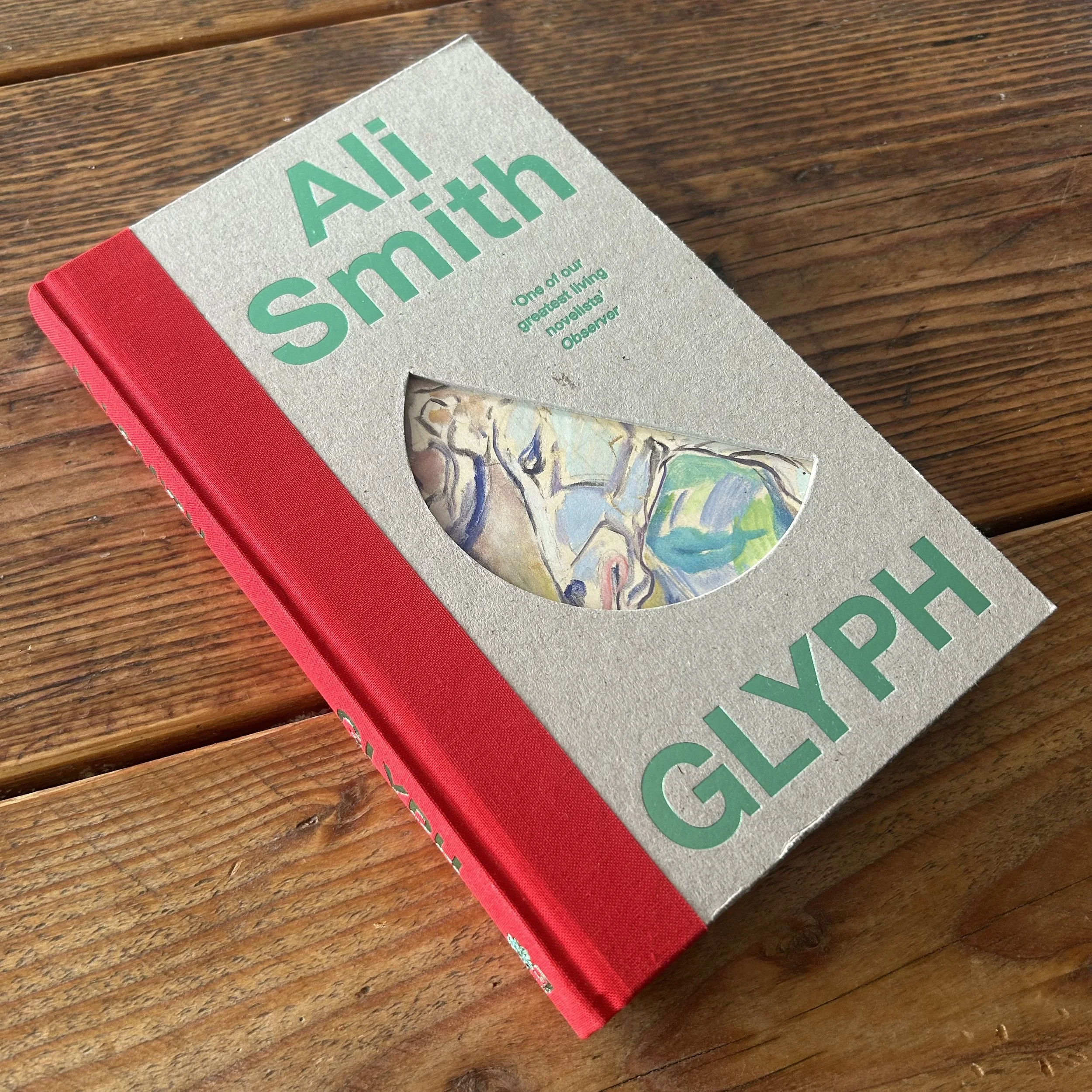
Glyph (2026)
Glyph focuses primarily on two sisters: Petra, the elder, and Patricia (or ‘Patch’). The novel is set in (roughly) the present day, but flashes back to look at the sisters’ childhood in the 1990s. At a family party, an elderly relative tells the story of seeing a man utterly flattened by tanks in France in the Second World War. The sisters create an imaginary friend from the unknown man, and name him ‘Glyph’. This story, and another war tale of a man in the First World War who was executed for desertion (following his unwillingness to put down a blind horse), continue to the haunt the sisters in the present day. Petra is still searching for details of the flattened man, and calls Patricia for help following years of estrangement after she believes she sees the ‘ghost’ of the blind horse in her bedroom, which (by whatever means) has been trashed.

The Palm House (2026)
The Palm House focuses on the friendship between Laura Miller (the narrator) and Edmund Putnam (known mainly as ‘Putnam’) two characters working in the London media landscape, set close to the present day. Over the course of a long weekend, they meet several times for drinks and crisps, and discuss the state of their lives, and share stories from their past. Putnam is coming to the terms with the death of his father and dealing with the arrival of a terrible new boss at Sequence, the cultural publication he has spent decades working for, and Laura is still somewhat in the shadow of her performative and over-the-top mother, and is somewhat listless in her current life and looking for ways to improve her circumstance.

Tell Me Everything (2024)
Tell Me Everything brings together characters from across Strout’s writing career. In rural Maine, Bob Burgess (from 2013’s The Burgess Boys) finds himself taking on the case of a reclusive man who is under suspicion of the murder of his mother; also living nearby is novelist Lucy Barton, living near the coast with her ex-husband William and now firm friends with Bob; and at Bob’s suggestion Lucy also begins to visit the now nonagenarian Olive Kitteridge in her nursing home, where the two share stories and ponder on life and love.

Olive Kitteridge (2008)
Olive Kitteridge is a short story cycle covering several decades in the lives of the inhabitants of a rural Maine community. One character is common throughout the collection’s stories, the indomitable Olive, a retired schoolteacher, matriarch, and pillar (of sorts) of the local community. She is central to many of the stories, an important piece of the plot in others, and entirely peripheral to a few others. It’s superficially an odd kind of assemblage, betraying in some senses its roots as a collection of short stories published by Strout over the course of the whole of the 90s and 2000s. But it does contain narrative progression, its throughline being in the development of its lead character, who in the course of the book sees her son twice married, her husband incapacitated and later passing away, and the beginnings of an unlikely later-life relationship.