The Benefactors (2025)
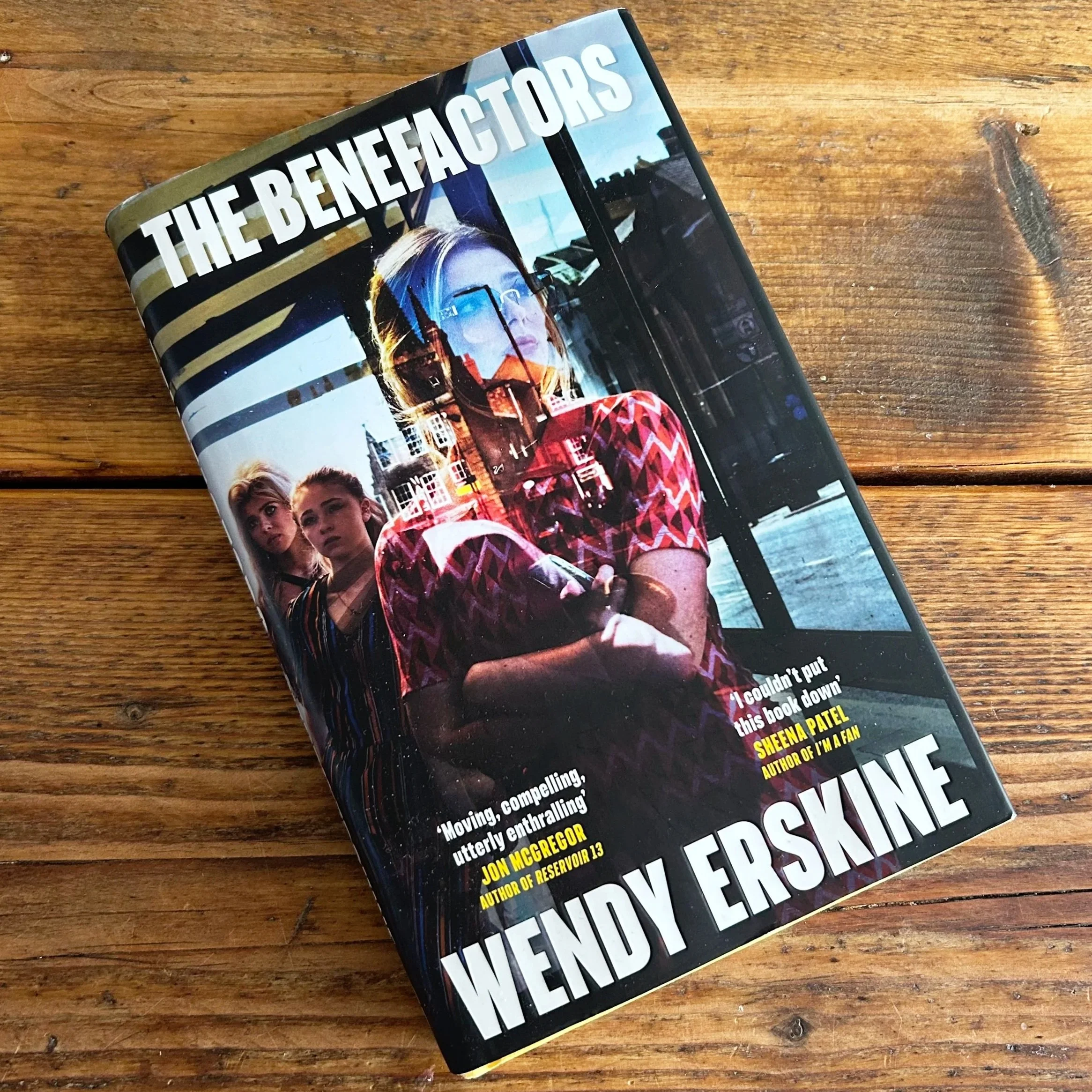
Why this one?
I’m dipping into a few books from the 2026 Women’s Prize for Fiction longlist, with the eventual goal of reading the full shortlist. I’d read three prior to the announcement, but this is my first since, and was chosen on the basis of a bunch of recommendations when I asked for them on Instagram.
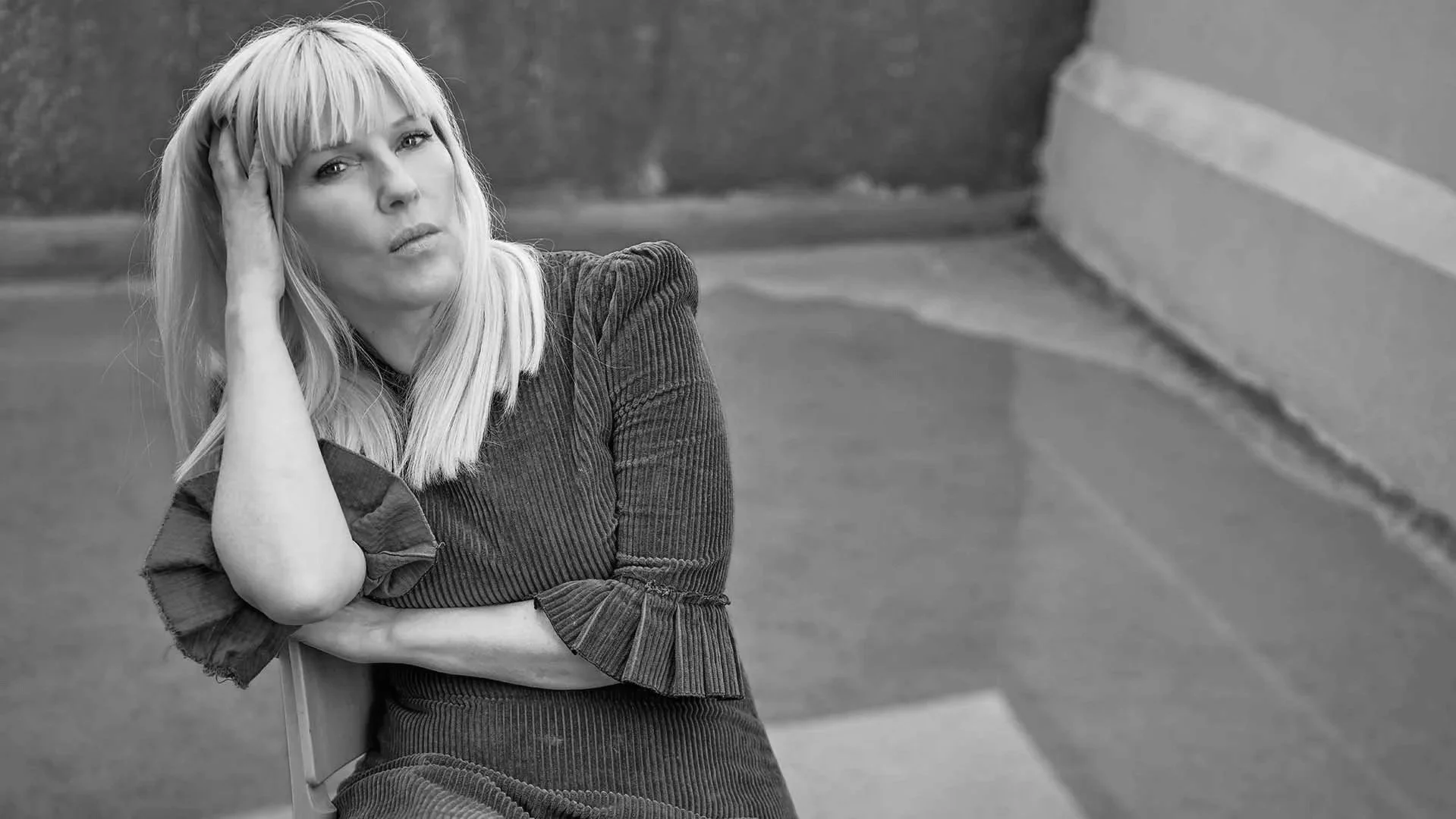
Wendy Erskine (1968- ; active 2015-) was born in Belfast, Northern Ireland. She studied English Literature at Glasgow University. Following a postgraduate degree, she went into teaching and still teaches English at a school in Belfast. She began writing seriously in 2015, after attending a six month fiction course in Dublin.
Since then she has published two collections of short stories, the first of which, Sweet Home (2018), appeared on numerous prize lists including the Edge Hill Short Story Prize shortlist and the Gordon Burn Prize longlist. 2022’s Dance Move was again shortlisted for the Edge Hill Prize, with one of its stories winning the Edge Hill Readers’ Choice Award. In 2022 she also edited Well I Just Kind of Like It, a collection of non fiction essays around art and the home. She was appointed a fellow of the Royal Society of Literature in 2023 and named by The Observer as one of 2025’s best new novelists. The Benefactors is her first novel.
Thoughts, etc.
The Benefactors is a novel told in a polyphony of voices, centring on the aftermath of a sexual assault that takes place at teenage party. Much of the novel’s focus is on the families of both the victim, Misty, and the three male protagonists. The young men’s mothers, while all very different, are part of a middle-class milieu that is utterly different from that inhabited by Misty, who lives in another part of town and is part of a family used to scraping money together to make ends meet. For her own part, Misty spends some of her time camming on an OnlyFans-style site called Benefactors (or ‘Bennyz’), which is used alongside her social status as ammunition by the mothers to discredit her. The book deals with this social divide, and the way in which the odds are stacked against the likes of Misty and her family, while those with money come together to protect their own, supported by a system that can’t be beaten.
I found this one a really interesting read, both in terms of its page-level interest and in the post-read analysis. It covers such a range of voices that it’s sometimes (arguably deliberately) difficult to know who’s speaking, especially in the vignettes that come between the main sections (which are largely in the - identified - voices of the four main families). But it’s that range of voices that makes it so impressive - showcasing how the voices of crowds can both come together in the deliberate obfuscation of truths that don’t suit, and also - at times - provide a chorus of indifference and distraction against which the novel’s main events can be easily ignored and swiftly moved on from. This wash of voices also contributes a tonal rendering of the shades of grey that run through everything in the book. While there are obvious conclusions to be drawn from its events, Erskine never spells them out, instead forcing us to reckon with those shades of grey and decide whose voices we trust; to separate the signal from the noise.
Misty and her family are the book’s most memorable, and certainly its most likeable, characters. They’re doing what they can to get by. Misty was dumped with her mum’s ex, Boogie, at a relatively young age, with her even younger sister Gen (Boogie’s child with her mother). Boogie is a taxi driver with an admirable stoicism in the face of all his challenges, a kind of ‘get on with it mentality’ that rubs off somewhat on Misty. More impressive is Nan D, the family matriarch, whose outspoken cynicism and vast experience of what it is to be a downtrodden member of the working class acts both as comic fuel and is the necessary match that lights the fire of the plot’s eventual conclusion.
The young men responsible for Misty’s assault are essentially nothing characters. They exist, they do something undeniably bad, but we don’t get to spend too much time considering either their motives or their lives in general. Our eyes are trained instead on their mothers, and the lengths they will go to to protect their boys. None of them spends much time dwelling on Misty’s fate. They jump directly into making excuses for them, and in some cases trying to turn the focus to indicators of Misty’s supposed poor character - a somewhat Victorian endeavour that is sadly still all too recognisable today - especially when it suits those with the power to deploy it.
The mothers are interesting, and given varying degrees of sympathy by the author. The most sympathetic is Miriam, who has recently lost her husband and is simply trying to cling onto her son. She goes along with the eventual scheme to pay off Misty because she seemingly lacks the energy or remaining lifeforce to do much else. And despite her circumstances, she’s also the only mother we really see trying to engage their son about the crime he participated in, a troublingly awkward (and at the same time pathetic) moment that perhaps dissuades her from the desire to engage in further deconstruction in a courtroom. Frankie sits somewhere in the middle. She’s also had a rough upbringing, but married into wealth and keen above all else to cling onto that. Her background should enable her to sympathise more with Misty’s predicament, but instead seems to have hardened her against caring too much, and in any case she can’t bear the thought of having her now-perfect existence disturbed.
The character who comes off worst of all, for me, was Bronagh, who is the public face of a child-focused charity, but offers nothing but hypocrisy in deploying the language of care against the most vulnerable character in the book, and in support of her son. She was something of an enigma - a former music industry manager who has entered a supposedly more caring profession, but really one that’s part of the corporate world and subject to the same tendency towards self-supporting bullshit and double-talk as any other part of that world. She seems to have buried herself so much in this persona and the maintainance of appearances that she will do anything to suppress her better instincts. Inevitably, perhaps, when the drama surrounding her son has been resolved, whatever she’s been holding back explodes, in the book’s most shocking and horrifying moment.
The book’s eventual conclusion is ultimately depressing in its realness. Misty, with Nan D’s help, has extracted what little she can in terms of ‘reparations’ from a system that’s designed for her to lose. She can move on with her life, but will be tainted by some for her choices, and has to live with the knowledge that no justice has been served. The system persists, of course, but at what cost to those that have played it? By the end of the book, while the sons may not have faced criminal charges, they have all been demonstrably lessened by their parents’ decisions to avoid justice. None of them is forced to reckon with their crimes - to justify themselves or to accept punishment for their crimes. As such, they end the book facing varyingly grim fates, protected by the system but not from their own conscience, or the tainting in the eyes of their family or society for what they’ve done.
Score
9
A book that I enjoyed reading but was elevated even more by thinking about its implications afterwards, once the dust had settled and I’d managed to tune out some of the dominant voices in the book and think about what their prioritisation actually meant. A strong contender for this year’s shortlist, surely. And a writer I’ll definitely be going back to.
Like the sound of this one? Buy it at bookshop.org.
(If you click through and make a purchase, I may earn a small commission from Bookshop.org at no additional cost to you, which helps support local independent bookshops. I’ll only share these links for the highest rated titles on the site. )
Next up
Wild Dark Shore