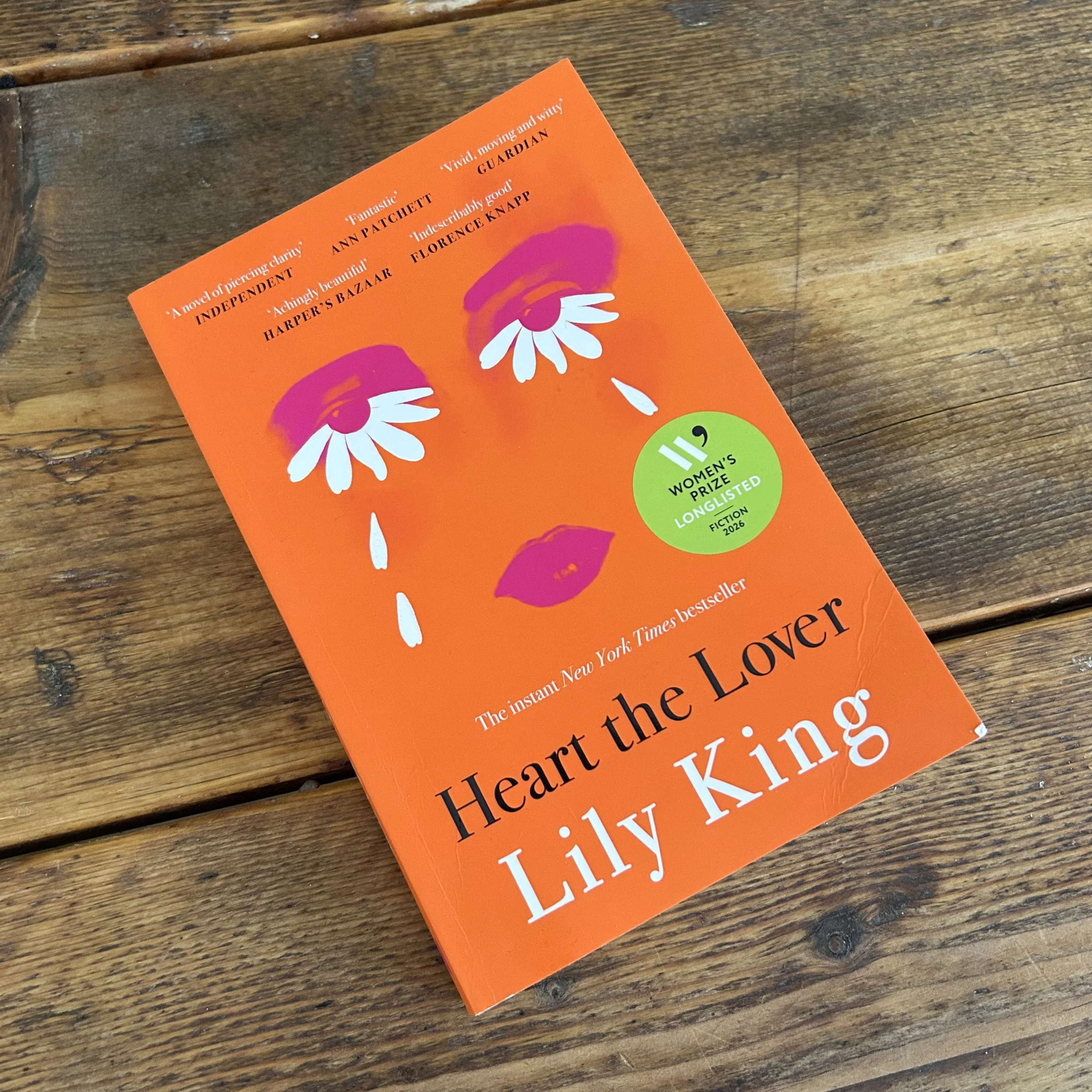
Heart the Lover (2025)
Why this one?
Reading the Women’s Prize for Fiction shortlist, after reading some from the longlist that mostly didn’t make it. This is my fourth of the six shortlisted books.
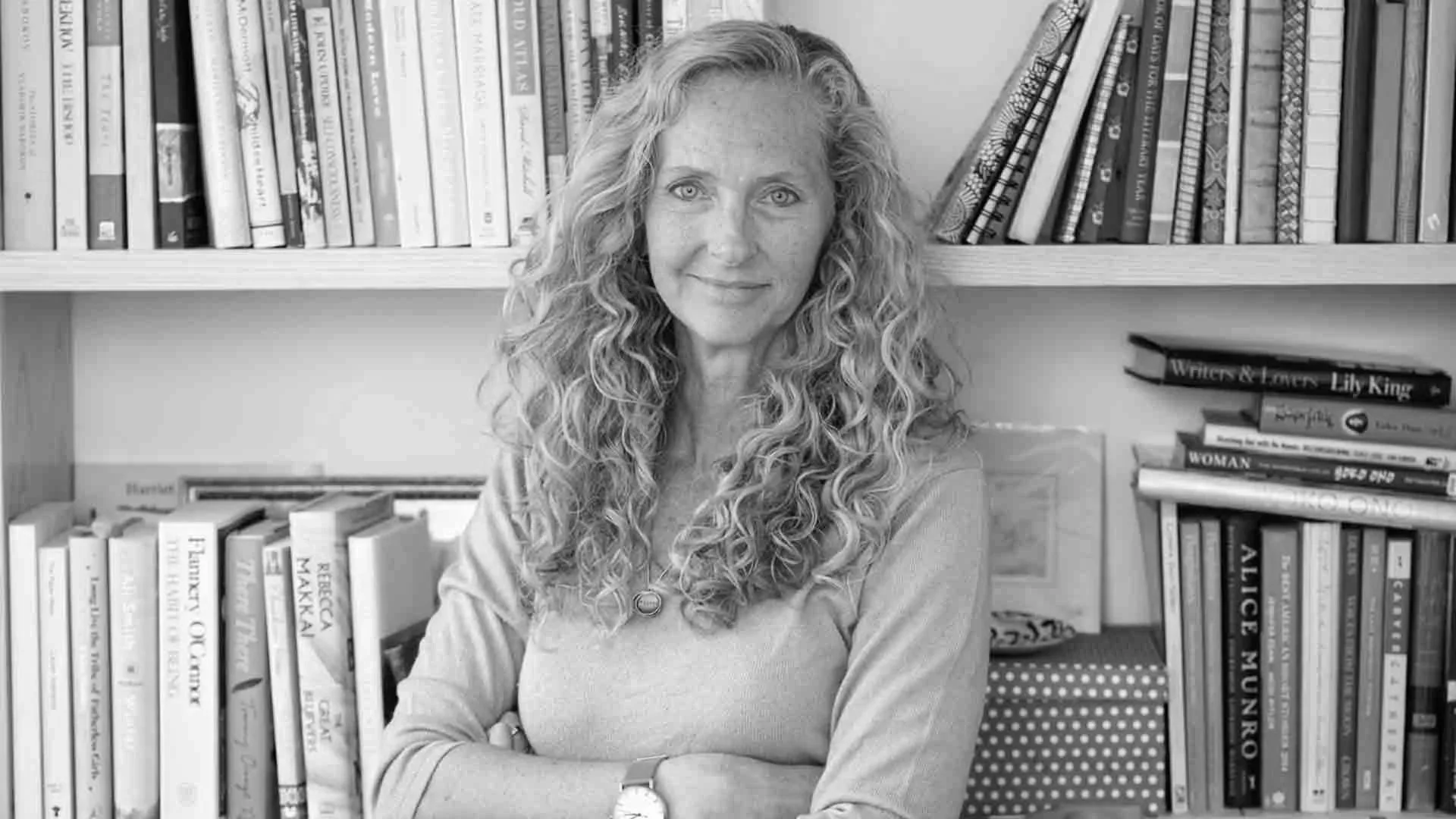
Lily King (1963- ; active c.1999- ) was born in Massachusetts, USA. She studied English Literature at the University of North Carolina at Chapel Hill in 1985 and subsequently undertook an MA in Creative Writing at Syracuse University. She then worked for some time as an English teacher at a bilingual school in Valencia, Spain, where she worked on her debut novel, The Pleasing Hour. Published in 1999, her debut won the Barnes & Noble Discover Great New Writers Award, and she won a Whiting Writers' Award in 2000.
She has published seven novels and one short story collection. Her notable works include Euphoria (2014), which won the inaugural Kirkus Prize for Fiction and has been optioned for a BBC limited series, and Writers & Lovers (2020), in development as a potential feature film. Over her career, she has taught creative writing at various high schools and universities, and her books have been translated into 28 languages. She currently lives in Maine with her husband and two daughters. Heart the Lover is her seventh novel and was published in autumn 2025.
Thoughts, etc.
Heart the Lover begins in the 1980s, when a female college student meets two witty and intelligent fellow students, Sam and Yash, who come to play a very significant role in her life. Nicknamed ‘Jordan’ by the two men, she initially falls in love with Sam but his religious nature, stuffy family and his own tempestuousness (and generally dickishness if we’re being honest) soon put paid to that. She relatively quickly falls into a seemingly healthier relationship with Yash, but when she moves to Paris to become an au pair, he is distant in more senses than just the physical and seems less willing than Jordan to commit to their future together. When she returns to the US, he fails to meet her at the airport and she decides, heartbroken (and - unknown to Yash- pregnant) that their relationship is over.
In the later sections, we learn that ‘Jordan’ is in fact Casey Peabody, the protagonist of King’s previous novel Writers & Lovers. These sections are set after that book, revealing that she is now a successful author with two children. In a brief middle sectionYash visits Jordan after many years, meeting her children and her new partner Silas. A passing stranger mistakes Yash for the childrens’ father. The more significant section, though, is the final one, set somewhere closer to the present day. In this section, Jordan - already dealing with one of her young boys’ ongoing cancer, for which he has an upcoming surgery - learns that Yash too has cancer, and is dying.
She flies to visit him in hospice, where he is surrounded by a rotating cast of friends and relatives, many of whom bring back memories from their earlier life together. One of those is Sam, with whom Yash has maintained a deep friendship over the years (including during, and likely to the detriment of, his relationship with Jordan). While Silas looks after her children at an incredibly difficult time, she stays by Yash’s side, reconciling to some extent and wrestling with whether to reveal the secret, never told, of her pregnancy with Yash’s child. Yash is, at least outwardly, positive about his circumstances, and before he passes away discusses theories of time and purpose with Casey.
I found this an interesting one to unpick. It’s certainly a book of two halves. The first part offers an appropriately melodramatic depiction of a love triangle amongst three people barely out of their teens, all bright young minds bursting with ideas and a lot of energy to throw into what seem from the start like doomed young romances. This section breezes past, super enjoyable and - if not totally original - a really believable depiction of college life, the naivete, idealism, and ambition of youth, and love of various kinds (even from this stage, it’s clear that bonds of friendship and in come cases family seem likely to trump this youthful version of romantic love). The conclusion to this section is incredibly powerful and sets a high bar for the rest of the novel.
The resolution certainly has a lot going for it too. I have to admit that I came across this dual-cancer narrative at a very inopportune time, which made it hard to read, but at the same time illuminating and incredibly emotional. It contains the fruits of those earlier seeds - Casey’s family life, for all its hardships, is beautifully depicted. As also is the ongoing friendship between Yash and Sam (and more broadly the community of friends and family that surround Yash on his deathbed). It is heartbreaking, and incredibly poignant in places, and I think the central juxtaposition works very well - contrasting in the pages of a short novel these harrowing moments at the end of life with the preceding hopeful, emotionally vibrant, idealistic images from the characters’ younger lives. Even as someone who hasn’t read Writers & Lovers and so has no prior connection to any of the characters in the book, they’re all believable and compelling and feel like real people we care deeply about.
While reading, I had maybe one major issue with it, which was just quite how central a role these men from her youth play in Casey’s life. We do of course find out that there are some good reasons for this - both the fact that their early literary sparring shaped her career and to a large extent her life, and the obvious fact of the secret relating to Yash that she has been burdened with for decades. But ultimately she has forged a successful career, found a caring and devoted husband and had two children she cares very deeply about (one of whom is seriously ill). So it did initially feel slightly odd at this point in her life that her focus is on a couple of guys who behaving abysmally towards her when she was a student, especially with her sick child waiting for pivotal surgery back at home.
There’s something very interesing, though, in the philosophical debate she enjoys with Yash on his deathbed around Eternalism and Presentism. As a mother, and a mother of a seriously ill child, she is forced to live almost all of her life entirely in the present, so it makes sense that she takes this side of the argument (‘the present is all there is, nothing exists meaningfully outside of it’). But presumably there’s something alluring to her also in Yash’s optimistic embrace of Eternalism (‘everything that has happened or will happen is happening at the same time’). It’s a philosophy that offers various comforts, and for Casey an escapism of sorts back into the simpler concerns of their youth (back to her ‘Jordan’ role and out of her present one of ‘mother’), with her perpetually delayed flight back to her family somewhat symbolic of her desire to make the most of this brief excursion from reality and into those same comforts that are sustaining her old friend in his dying moments.
Score
8.5
Ultimately despite a few nagging concerns I thought on reflection this was generally brilliantly done, with some seriously weighty themes lurking beneath its seemingly everyday concerns. I’m very keen to try to read Writers & Lovers now, to effectively fill in the gaps in Casey’s life!
Like the sound of this one? Buy it at bookshop.org.
(If you click through and make a purchase, I may earn a small commission from Bookshop.org at no additional cost to you, which helps support local independent bookshops. I’ll only share these links for the highest rated titles on the site. )
Next up
The Mercy Step