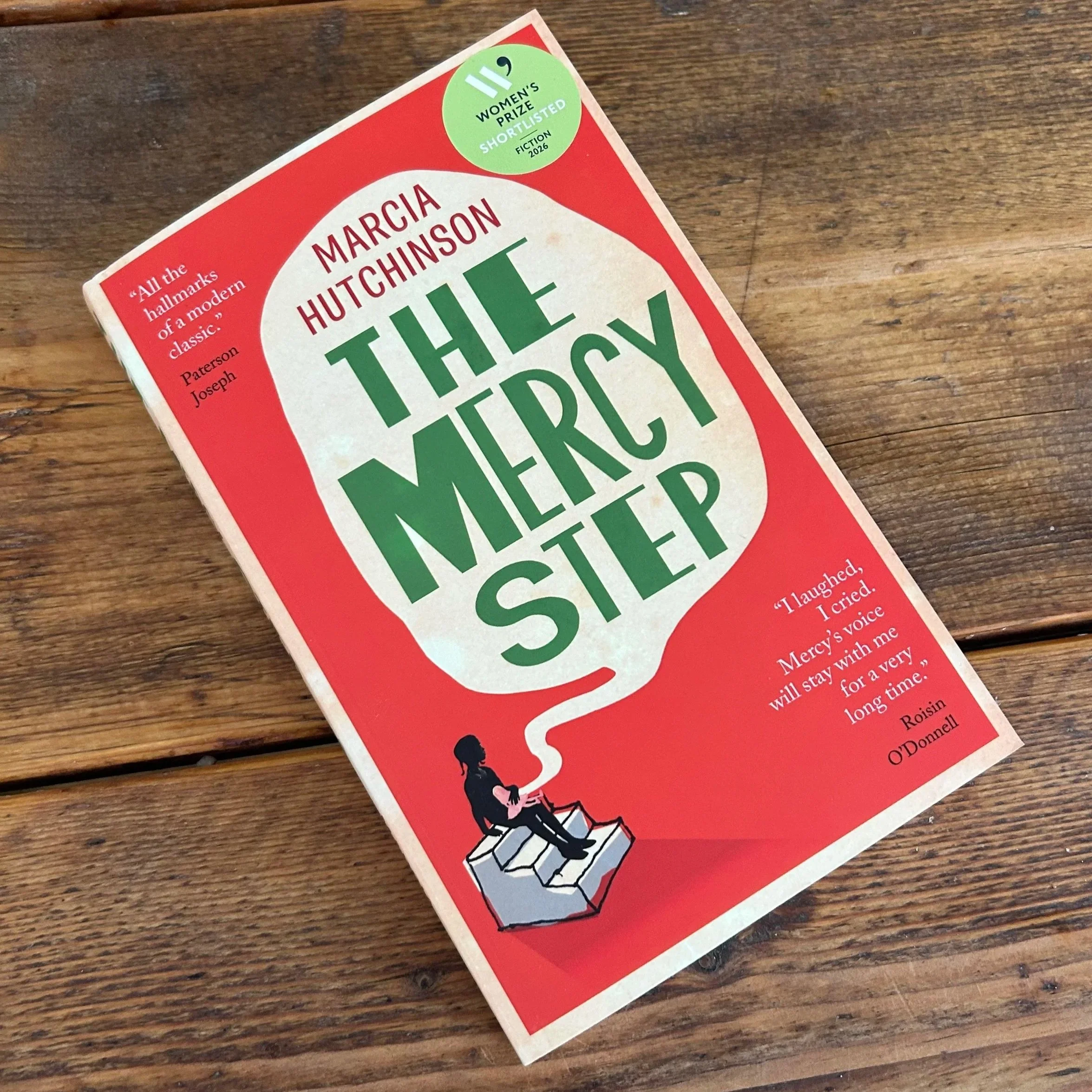
Why this one?
Reading the Women’s Prize for Fiction shortlist, after reading some from the longlist that mostly didn’t make it. This is my fifth of the six shortlisted books.
Marcia Ann Hutchinson MBE (1962- ; active c. 2021- ) was born in Manningham, Bradford, UK, to Windrush-generation Jamaican parents. The seventh of nine children, she grew up in Bradford and attended Belle Vue Girls' Comprehensive School. She became the first pupil from her school to be admitted to Oxford University, attending Brasenose College from 1982 to 1985 to read jurisprudence, and subsequently qualified as a solicitor in 1986 after studying at the College of Law. Her early career was spent working as a lawyer specializing in Town and Country Planning for firms in London and Leeds.
Following the birth of her daughters, Hutchinson moved into educational publishing, founding the multicultural publishing and training company Primary Colours, which operated from 1997 to 2014. Her work in cultural diversity earned her an MBE in 2010. She also entered politics, establishing the Pipeline Project to increase representation for Black politicians and serving briefly as a Labour councillor in Manchester in 2021. nder the pen name 'Lila Cain', she published her first novel, The Blackbirds of St Giles, a work of historical fiction co-authored with Kate Griffin. Its sequel, The Nightingale of Covent Garden, is due to be published in January 2027. The Mercy Step is her debut novel under her own name, apparently rejected more than fifty times before being picked up by the small Cassava Republic Press in July 2025. It was selected as one of The Observer's best debut novels of 2025 and won the Discover Prize at the British Book Awards, before being shortlisted for the Women's Prize.
Thoughts, etc.
The Mercy Step is a coming-of-age novel focusing on Mercy Hanson, the daughter of Windrush generation immigrants, from her premature birth in 1962 in Bradford through to her early teens. The book is narrated from Mercy’s perspective, starting in the womb and then in early months in hospital with ‘New Monya’. From an early age, she’s evidently a gifted and perceptive child and feels disconnected from the rest of her siblings, instead finding solace in chats on her ‘mercy step’ with her Dolly. She nonetheless feels closely tethered to her mother, a bond which is tested throughout the book by her inability to fight back against her abusive and generally unpleasant husband, Mercy’s Daddy, by her blind devotion to her religion, and by the general strains of being a struggling mother of many children. By the end of the book we find out whether she’s able to cut the cord from her mother and make her own way in life.
Overall I really enjoyed this one. While encompassing the specific conditions of Carribean immigrants in the 1960s, the hardships of scraping by in the north of England, and the issues compounded by the intersection of the two, it’s also just a straightforwardly relatable depiction of childhood. While Mercy’s childhood is beset with traumatic incidents, the overriding tone is one of dark humour, with Mercy inured early on to some of the things that might break an average child, often left to fend for herself and therefore developing coping mechanisms that enable her to brush off all but the very worst of her experiences. Her reaction to the second of her childhood acquaintances dying in an unfortunate accident is especially memorable. At times I got an almost Adrian Mole-esque vibe from the tone. Which sounds weird because obviously there are some horrible and genuinely dark experiences recounted here, but I think that tonal contrast is what makes this an especially readable book.
With the relatability of the coming-of-age narrative also come a few cliches of the genre. It’s far from the first book to detail a gifted child feeling alienated from their somewhat blinkered family, finding solace in imaginary friends and then later books and libraries, and then ultimately seeming set to find her way to ‘that London’ accompanied by the help of a cooler older relative. But honestly I didn’t mind that. It’s a structure that has been repeated time and again for a reason, and that’s that it works really well. Of course we could scream emotional manipulation but why complain when you get to cheer the upward trajectory of an unfairly downtrodden child, breaking the shackles of the forces weighing her down (as so often, it’s men and religion) and forging a better path for herself. I also thought the nuance of Mercy’s specific circumstances, her family’s background and the historical moment, made it sufficiently different from others of the genre to still feel fresh.

Score
9
Overall a charming and enjoyable book that despite its potentially heavy themes stands out in this year’s shortlist for its lightness of touch, warmth, and energy. Probably my favourite so far.
Like the sound of this one? Buy it at bookshop.org.
(If you click through and make a purchase, I may earn a small commission from Bookshop.org at no additional cost to you, which helps support local independent bookshops. I’ll only share these links for the highest rated titles on the site. )
Next up
Kingfisher